Can one simple part decide whether your entry lifts smoothly or stops mid-cycle? We ask that because the answer affects your daily routine and safety.
We explain the meaning of garage door spring life expectancy so you know when to plan service. Tensioned springs create the force that opens and closes a heavy panel. Two main types exist: torsion mounts above the opening and extension runs beside the tracks.
Most units are rated for about 10,000 cycles, which often equals roughly seven years at four cycles per day. Humidity, corrosion, heavy panels, and frequent use shorten the expected lifespan. Regular balance checks, lubrication, and professional maintenance extend useful life.
As a family-owned team, Emerald Garage Door Services offers licensed, insured, and bonded help across Central Florida. We are available 24/7/365—call (407) 788-1229 or email EmeraldGarageDoorServices@gmail.com for prompt, guaranteed work.
Key Takeaways
- Understand what affects your system’s lifespan and when to schedule service.
- Torsion and extension types behave differently; torsion usually lasts longer.
- 10,000 cycles is a common rating—translate cycles into years to plan ahead.
- Humidity and heavy panels speed wear; routine maintenance helps prevent failure.
- Emerald Garage Door Services offers 24/7 licensed, insured, bonded support in Central Florida.
Understanding Garage Door Springs and How They Work
Understanding how those coils store and release energy helps you spot trouble early. We explain the two main types and how each keeps your entry balanced and safe.
Torsion springs mount horizontally above the header and twist to store torque. They distribute force evenly, so operation feels smooth and components wear more slowly.
Extension springs run beside the track and stretch as the panel moves. They are common on older or lighter residential setups and have more moving parts.
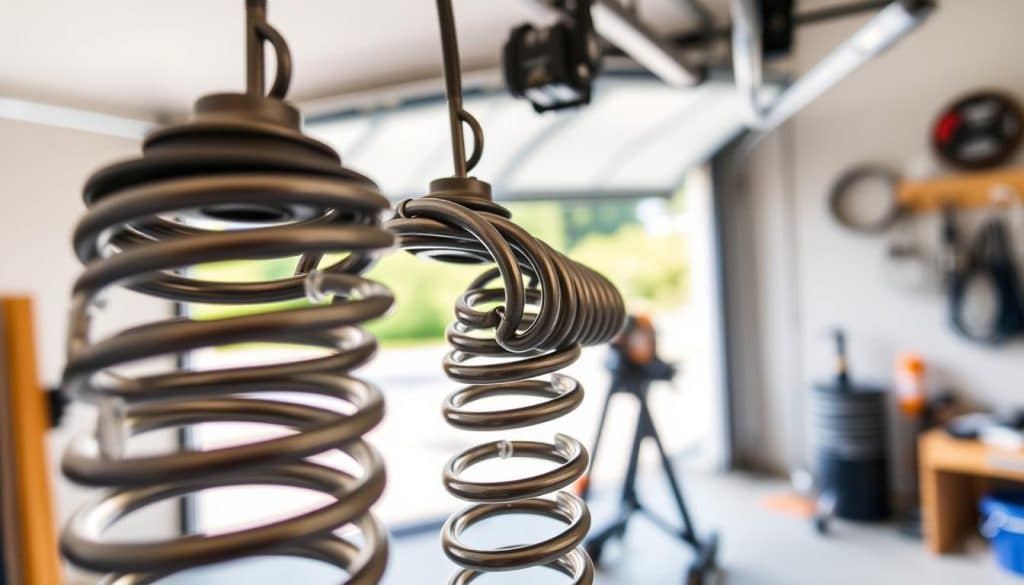
Both types counterbalance heavy panels so an opener can lift with less strain. When springs weaken, the door can feel heavy, drift, or stop aligning in tracks. That imbalance forces the opener to work harder and can shorten motor and gear life.
- Identify whether your system uses torsion above the header or extension beside the tracks.
- Listen for new noises and watch for uneven movement; these are safe checks from the ground.
- Leave adjustments to trained technicians; both types hold high tension and require special tools.
Garage door spring life expectancy: averages, cycles, and real-world use
Counting how many times your entry moves each day gives real insight into wear.
What is a cycle? One full opening and closing counts as a single cycle. Manufacturers rate many residential systems at about 10,000 cycles. That rating is a baseline to plan maintenance and replacement.
The 10,000-cycle standard and what it means in years
At roughly four opening and closing events per day, 10,000 cycles equal about seven years. Change that to two or eight events and the timeline halves or doubles. These simple math steps help homeowners budget for service before a sudden failure.
Torsion vs. extension lifespan: which lasts longer and why
Torsion units often reach 10,000–15,000 cycles because they spread load evenly and use fewer moving parts. Extension types typically average 5,000–10,000 cycles and can fail more suddenly.
- Track daily usage after lifestyle changes to adjust inspection timing.
- Note heavier panels and high humidity as factors that shorten expected lifespan garage.
- Schedule a visual check as your system nears its rated cycles to avoid emergency repairs.
Key factors that affect how long garage door springs last
A few common stresses make springs wear faster than you might expect. We outline the main factors so you can protect your entry and plan maintenance.
Daily cycles and heavy usage
Every open-and-close counts as a cycle. More cycles mean more metal fatigue and earlier replacement. If your household runs the entry many times a day, schedule inspections sooner.
Central Florida weather: humidity and corrosion
High humidity and salt in the air speed corrosion. Corroded coils lose strength and fail earlier. We recommend routine lubrication and checks to slow rust in Orlando and nearby areas.
Weight, size, and opener strain
Heavier and custom panels — like glass or double models — increase load. That added weight forces the spring and the opener to work harder. Properly matched springs prevent undue stress on the whole door system.
Spring quality and wire gauge
Material and wire thickness matter. Oil-tempered options resist fatigue better. But thicker wire must be engineered to match the weight and the system. Thicker alone is not a cure.
- Daily cycles link directly to fatigue—track usage to set inspection intervals.
- Central Florida humidity accelerates corrosion; regular maintenance slows damage.
- Heavy weight doors require matched springs and correctly sized wire gauge.
- Balanced springs reduce strain on the garage door opener and extend system life.
Warning signs your door springs are near the end of their lifespan
Strange bangs, scraping, or a door that drifts mid-travel are clear red flags to us. Listen for popping, loud squeaks, or a sudden bang. Those sounds often point to failing coils or worn hardware.
Look for visible gaps between torsion coils or relaxed extension coils. Rusted, frayed, or missing lift cables and safety cables are urgent issues that compromise safe operation.
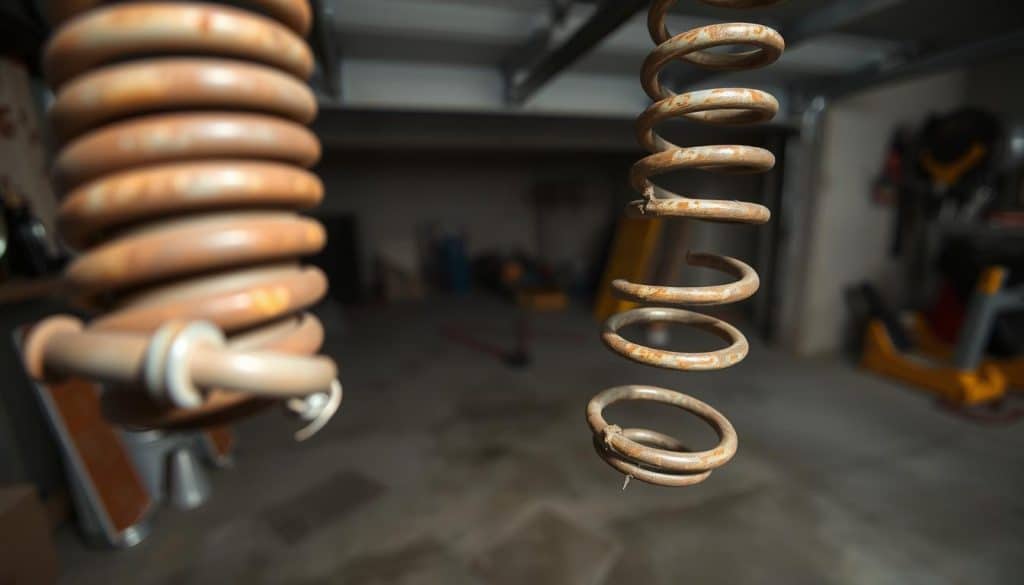
Noises, gaps in coils, rusted cables, and uneven movement
Common symptoms include persistent squeaking, scraping, popping, or loud bangs. Each sound can indicate wire fatigue, broken parts, or loose brackets.
An off-balance panel that drifts, hangs, or won’t stay mid-way typically means the spring has weakened or failed. That also stresses the door opener and related hardware.
Safety risks of worn springs: sudden failure and slamming panels
Springs under high tension can snap without warning. A sudden break can cause the panel to slam shut, risking injury and damage to vehicles or property.
When to stop using the panel and call a professional immediately
Stop using the entry at the first severe sign. Do not attempt to lift, reset, or repair high-tension parts yourself. DIY repairs with incorrect tools or sizing can make a small issue dangerous.
- Stop use now if you hear loud bangs or see gaps in coils.
- Don’t touch frayed cables or try to force the panel open.
- Call us 24/7/365 for safe evaluation and same-day replacement by background-checked, licensed, insured, and bonded technicians: (407) 788-1229 or EmeraldGarageDoorServices@gmail.com.
How to extend spring lifespan and when to call Emerald Garage Door Services
Routine checks and minor upkeep keep your mechanism balanced and quieter for years.
Simple maintenance you can do
Lubricate moving parts every 6–12 months to reduce friction. Use a silicone-based lubricant on coils, hinges, and rollers.
Perform a basic balance check: disconnect the opener, lift the panel halfway, and see if it holds. If it moves, call for professional adjustment.
Reduce unnecessary cycles by bundling trips and using side entries when possible. Fewer cycles help parts reach their rated 10,000 cycles and reduce wear.
When to call Emerald Garage Door Services
Schedule professional inspection if you spot rust, frayed cables, gaps in coils, or if balance fails the test. We handle spring replacement, rebalancing, and correct sizing to match your door weight.
- Licensed, insured, bonded technicians perform safe replacement and rebalancing.
- Same-day service and guarantees on parts and labor across Central Florida.
- Available 24/7/365 — call (407) 788-1229 or email EmeraldGarageDoorServices@gmail.com today for prompt service.
Conclusion
Conclusion
Keep your system predictable with planned inspections and prompt repairs. We recommend tracking cycles and scheduling checks before parts age into failure.
Remember: garage door springs and other coils carry the load so the panel moves safely. Door springs vary — torsion springs usually last longer than extension springs when matched and maintained.
Balance protects the opener and helps parts reach rated cycles. If you hear bangs, see gaps, or notice uneven travel, stop use and call for spring replacement.
We are family-owned, licensed, insured, and bonded. Our background-checked team offers guaranteed parts and labor 24/7/365. Call (407) 788-1229 or email EmeraldGarageDoorServices@gmail.com for Orlando-area support.
FAQ
What can homeowners expect for garage door spring life expectancy?
Average springs are rated for about 10,000 cycles, which typically equals 7–10 years for most households. Heavy use, poor maintenance, or corrosive conditions in Central Florida can shorten that. We recommend regular inspections to catch wear early and plan replacement before a sudden failure.
How do torsion springs differ from extension springs in placement and safety?
Torsion springs sit above the opening on a torsion bar and twist to lift the panel. Extension springs run along the track and stretch to raise the panel. Torsion systems are generally safer and more balanced. Extension systems require careful containment and regular checks because a snap can be hazardous.
How do springs counterbalance the weight of my door?
Springs store and release energy to offset the door’s weight so the opener doesn’t do all the work. Properly set springs make the door feel light by hand and ensure smooth opener operation. Misadjusted or weak springs let the opener strain, shortening its lifespan.
Why does spring condition affect opener performance and door balance?
Worn or losing-tension springs force the opener to lift more weight. That increases motor wear and may cause jerky movement, uneven travel, or premature opener failure. Balanced springs preserve opener life and ensure safer, quieter operation.
What does the 10,000-cycle standard mean in real-world years?
Ten thousand cycles means one full open-and-close action counted once. For a typical family using the system 3–4 times daily, that equates to roughly 7–9 years. Commercial or high-use doors can reach the limit much faster.
Which lasts longer: torsion or extension springs?
Torsion springs usually outlast extension springs when both are similar quality. Torsion springs provide smoother operation and greater durability, especially when properly lubricated and installed with correct wire gauge.
How do daily cycles and heavy usage affect spring longevity?
More cycles mean faster wear. Homes with remote openers, deliveries, or multiple cars increase cycle counts. Reducing unnecessary trips and using keypad or smart-openers wisely helps extend useful life.
How does Central Florida weather impact spring lifespan?
High humidity and salt air in the region accelerate corrosion. Temperature swings can also change metal tension. Regular lubrication and corrosion-resistant components help combat these local challenges.
Do door weight and materials influence how long springs last?
Yes. Heavier panels—glass, insulated, or double-wide—place more stress on the system. Springs must be sized to match weight and balance. Undersized springs shorten service life and strain the opener.
How important are spring quality and wire gauge?
Very important. High-quality, oil-tempered springs with correct wire gauge deliver predictable cycles and better longevity. Cheaper or incorrect springs wear faster and pose greater safety risks.
What are the common warning signs springs are failing?
Listen for loud bangs, grinding, or squealing. Look for gaps in coils, visible rust, frayed cables, or uneven door movement. If the door sags on one side or the opener struggles, call a pro promptly.
What safety risks come with worn springs?
A broken spring can let the panel slam shut or fling parts at high speed. That risks property damage and serious injury. Never try to repair a high-tension spring without proper tools and training.
When should I stop using the door and call for service?
Stop using the system if you hear loud snapping, see broken coils, notice the door won’t stay open, or observe significant imbalance. Contact Emerald Garage Door Services immediately for a professional assessment and emergency support.
What simple maintenance can homeowners do to extend spring lifespan?
Keep moving parts lightly lubricated with a spray lubricant made for metal components. Check balance by disconnecting the opener and raising the door halfway—if it drifts, the system needs adjustment. Limit unnecessary cycles and keep tracks clean.
When should I call Emerald Garage Door Services for inspection or replacement?
Call us any time you notice signs of wear, after 7–10 years of service, or if you want a pro balance check. We provide licensed, insured inspections, rebalancing, and replacement. Reach us 24/7/365 at (407) 788-1229 or EmeraldGarageDoorServices@gmail.com.