Have you ever measured your opening and wondered which option truly fits your life and vehicles?
We are Emerald Garage Door Services, a family-owned team serving Central Florida and Orlando. We handle repair, installation, and maintenance for any garage door and opener. Every technician is licensed, insured, bonded, and background checked.
There is no single standard garage door. Certain widths and heights recur, but the right choice depends on your needs, vehicle clearance, and curb appeal.
We wrote this buyer’s Common Garage Door Sizes guide to simplify decisions for a new garage or replacement. You’ll learn typical widths and heights, when to choose custom sizing, and pro tips to avoid delays or extra costs during installation.
We guarantee parts, labor, and 24/7/365 support. Call (407) 788-1229 or email EmeraldGarageDoorServices@gmail.com to schedule a free on-site assessment.
Key Takeaways
- There is no one-size-fits-all; measure for vehicles and storage.
- Typical single and double widths guide most home projects.
- Custom sizing helps with RVs or unique architecture.
- Professional measurement avoids install delays and extra cost.
- We offer licensed, insured technicians and round-the-clock service.
Why Garage Door Size Matters for Daily Use and Long-Term Value
A properly matched opening keeps vehicles safe and makes everyday access simple and stress-free. We size openings to protect cars and to keep your routine moving without tight turns or last-minute adjustments.
Correct dimensions improve safety and function. Too-narrow openings raise the risk of scrapes and delays. Wider or taller choices support SUVs, pickups, and multi-use spaces. For businesses, well-sized openings speed loading and reduce operational risks.
We consider current and future vehicles, plus how you use the space. That helps preserve curb appeal and long-term value. We also check ceiling height, side clearance, and back depth so tracks and springs work quietly and reliably.
- We size a door to your life so parking and unloading are easy.
- We plan for larger vehicles, accessories, and workspace uses.
- We balance energy, structure, and appearance for lasting value.
- We confirm every measurement before ordering to avoid costly rework.
We’re available 24/7/365 for urgent repairs that keep your day on track. Call us to ensure the opening fits your life and protects your investment.
Key Dimensions to Measure Before You Choose a Door
Before you order, precise measurements prevent delays and extra costs during installation. We begin at the opening and record width and height in inches at multiple points. This finds any taper, bow, or uneven floor that affects fit.
Next we check side room on each side. Allow about 3.75 inches per side for springs, tracks, and flag brackets so wiring and conduit do not crowd the frame.
Measure headroom from the top of the opening to the ceiling and add opener clearance (about 3 inches). We also verify backroom depth to the rear wall to confirm there is space for horizontal tracks or a wall-mount unit.
- We document true dimensions in feet and inches to match a garage door size to your vehicles and storage plan.
- We confirm the floor is level and the frame is plumb and square for a tight seal and smooth operation.
- We note obstacles—lighting, sprinklers, attic hatches—and plan hardware and sensor placement accordingly.
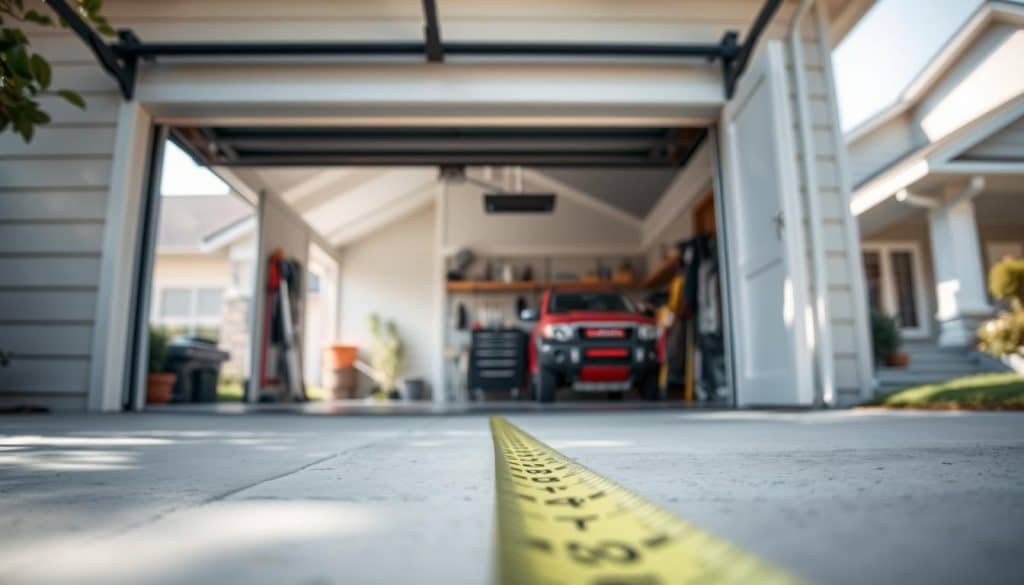
We measure accurately, verify structure, and recommend the right springs, track type, and opener. Our installation is guaranteed, and we stand behind it 24/7/365 to keep your door safe and quiet.
Common Garage Door Sizes for Homes
Choosing the right opening dimensions makes daily parking and storage simple.
Single-car options typically range 8 to 9 feet wide by 7 to 8 feet high. Typical choices include 8×7, 8×8, 9×7, and 9×8. A 9-foot width gives extra clearance for modern vehicles, roof racks, and mirrors.
Double-car models most often measure 16 feet by 7 or 8 feet. These offer easier maneuvering for two vehicles and a clean façade. Widths can vary from about 14 to 20 feet depending on the footprint.
Footprints and tall vehicles
One- to four-car garages use single or paired openings to suit layout and driveway approach. Deeper plans improve aisle space and storage.
For RVs and tall vehicles, plan doors 10–12 feet wide and 12–14 feet high. These clear campers, vans, and boats on trailers without modifications.
- Two singles vs. one double: two singles give redundancy if an opener fails; a single wide opening simplifies turns.
- We recommend matching insulation and wind ratings to Central Florida conditions and pairing the right opener horsepower for larger sizes.
There’s No One “Standard Garage Door,” but There Are Standard Ranges
You’ll find popular widths and heights that cover most needs, while custom options fill the gaps.
Typical ranges include 8, 9, 10, 12, 14, and 16 feet in width with 7- and 8-foot heights. These bands suit most homes and vehicle types.
Half footprints like 1.5- and 2.5-car plans add storage or workspace without a full expansion. Many garage doors come cut to the nearest inch so we achieve a tight fit and a clean weatherseal.
How we decide what fits
- We match width and height to driveway approach, setbacks, and HOA rules.
- We check header height and lintel span before ordering to protect structure and performance.
- We recommend a custom garage plan when you need extra clearance for larger vehicles or unique architecture.
We tailor every new garage plan to your property and coordinate measurements, springs, track geometry, and opener clearance. Call us 24/7/365 for an on-site consult.
Commercial and Specialty Door Sizes for Business Needs
For high-traffic facilities, proper opening dimensions keep operations moving and reduce downtime. We help Orlando businesses pick robust openings that match workflow, vehicle mix, and building constraints.
- Service stations and auto bays: about 10 feet wide by 8–10 feet high to ease vehicle entry and exit.
- Warehouses: 12–14 feet wide by 14–16 feet high for pallet and forklift traffic.
- Industrial applications: openings up to 14–32 feet wide and 16–24 feet high to handle heavy equipment and deliveries.
We size doors to your exact vehicle mix so trucks, vans, and forklifts clear safely. We tailor hardware—tracks, springs, and reinforcement—to duty cycle and security needs.
Real-world example: Right-sizing loading openings cut wait times and improved safety for a multi-bay facility we service in the Orlando area.
- We coordinate opener logic with access control.
- We schedule installs around your workflow.
- We back every commercial garage door with responsive maintenance and 24/7/365 emergency repairs.
How to Measure for a New Garage Door Like a Pro
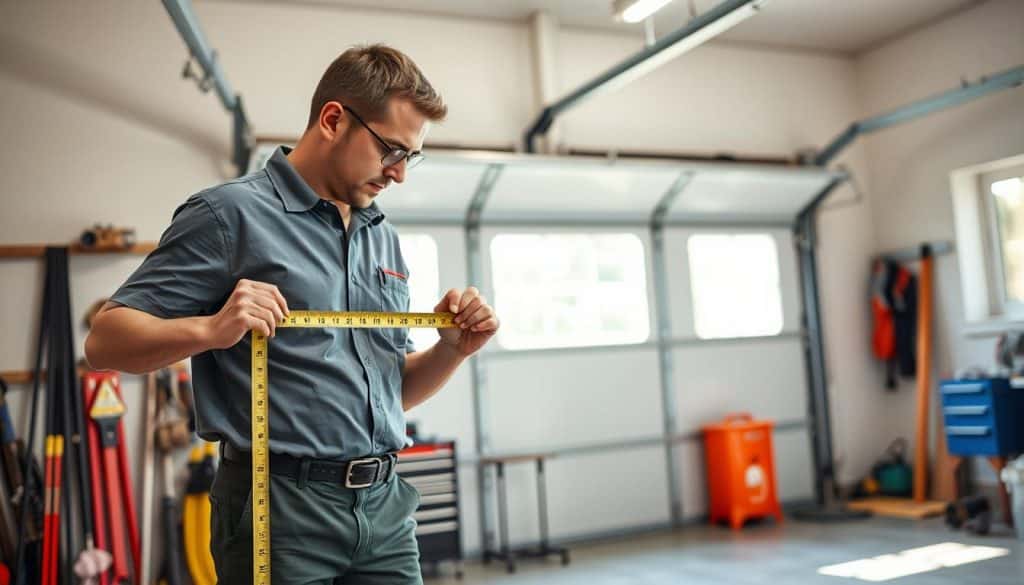
Begin with the widest and tallest points of the opening to find the controlling dimension. Accurate work up front keeps your installation on schedule and prevents costly reorders.
Measure width and height at the widest points
We measure width at left, center, and right to spot tapers.
We record height from floor to top at multiple spots and note any slab slope.
Verify side room, headroom, and backroom for tracks and opener
Check side room for vertical tracks, flag brackets, and wiring.
Measure headroom to the ceiling and include rail or wall-mount clearance.
Confirm backroom depth for full track length and opener placement.
Confirm the opening is level, plumb, and square
We inspect the frame and note any out-of-square conditions.
We document all dimensions with photos and written notes so your order matches the opening the first time.
- We recommend springs and hardware matched to door weight and daily use.
- We outline installation day steps, protect the work area, and clean up thoroughly.
- After install we test, tune, and review safety features. Our work is guaranteed and supported 24/7/365.
Selecting the Right Size Garage Door with Emerald Garage Door Services
Right-sizing your new entry starts with how you plan to use the space today and years from now. We balance vehicle clearance, storage goals, and curb appeal to make a practical, lasting choice.
Balancing vehicles, storage, and future needs
strong, reliable service guides every recommendation. We size openings so you have enough space for current vehicles and room to grow. We advise when a double garage door or two singles fits your lifestyle and redundancy needs.
Opener technology and headroom solutions for tight spaces
Many openers need about 3 inches of headroom. We offer low-headroom lift options and wall-mount units when ceilings are tight. That keeps function where space is limited.
Licensed, insured, bonded—guaranteed parts and labor, 24/7/365
- We right-size your new garage door to match vehicles and storage so you always have enough space.
- We help choose between a double garage and two singles, weighing convenience, redundancy, and opener choices.
- We tailor design, panel profile, and finishes so door size and look fit your home.
- We recommend custom garage options for RVs, lifted trucks, or unique layouts.
We are family-owned, founded by James Balfe, and we serve Orlando and Central Florida for repair, installation, and maintenance. Every technician is licensed, insured, bonded, and background checked. Call (407) 788-1229 or email EmeraldGarageDoorServices@gmail.com to schedule an assessment in your area.
Conclusion
Picking the right size saves time, prevents damage, and protects your investment.
We’ve shown how correct measurements and matched width and height keep parking easy and vehicles safe. Typical ranges span 8–16 feet for most homes and larger openings suit RVs and specialty rigs.
Choosing two singles or one wide entry is a trade-off between redundancy and ease of turning. Accurate site measurement avoids reorders and a delayed install.
We stand behind our work with guaranteed parts and labor and 24/7/365 support. Family-owned and serving Orlando and Central Florida, our licensed, insured, bonded team is background checked and ready to help.
Call (407) 788-1229 or email EmeraldGarageDoorServices@gmail.com to schedule a consultation on the best garage door size for your home or business.
FAQ
What are typical garage door opening widths and heights we should expect?
Typical openings for residential properties are usually 8–10 feet wide for a single vehicle and about 16 feet wide for a double. Heights commonly run 7 or 8 feet. Measure the actual opening in inches to confirm before ordering or installing a replacement.
How much side room and headroom do we need for tracks and an opener?
Plan on roughly 3.75 inches of side room on each side for tracks and springs. Headroom above the opening should be about 3 inches for standard setups. Tight clearances may require low-headroom hardware or a wall-mounted opener.
What is backroom and why does it matter when selecting a new door?
Backroom is the depth from the garage door opening to the rear wall. It determines how tracks, springs, and the opener fit. We recommend measuring this space to ensure proper operation and to choose an opener that fits the available depth.
When should we choose two single doors instead of one double door?
Choose two single doors if you need separate access, easier replacement, or better insulation between vehicles. One double door often works better for wide access and large vehicles. Consider vehicle sizes, driveway layout, and future needs when deciding.
What sizes are best for RVs and tall vehicles?
RV and tall-vehicle openings commonly range from 10–12 feet wide and 12–14 feet high. Measure the tallest and widest vehicles you’ll store and add clearance for safe entry and exit.
Are there standard size ranges or do we need a custom door?
There are standard ranges—common widths include 8, 9, 10, 12, 14, and 16 feet with 7- and 8-foot heights. Many garages use these standard options, but we can supply custom doors or half-size and specialty configurations when the opening doesn’t match a standard footprint.
What should we check to make sure the opening is ready for installation?
Verify the opening is level, plumb, and square. Check floor level and that the frame is true. Measure width and height at several points, and confirm side room, headroom, and backroom clearances to choose the right hardware and opener.
What commercial or industrial sizes are available for businesses?
Commercial needs vary. Service bays are often around 10 feet wide by 8–10 feet high. Warehouse doors commonly run 12–14 feet wide and 14–16 feet high. Industrial applications can reach 14–32 feet wide and 16–24 feet high. We size doors to meet business equipment and operational needs.
Can we install an opener if headroom is limited?
Yes. Low-headroom track systems and wall- or jackshaft-mounted openers allow installations where standard headroom is tight. We assess the space and recommend solutions that maintain safe operation and convenient access.
How do we decide between durability, insulation, and aesthetics when choosing a size and style?
Balance vehicle clearance and storage needs first. Then select materials and insulation R-values based on climate and energy goals. Finally, pick a look that complements your home. We guide you through trade-offs to meet long-term value and function.
Do you provide measuring and installation services in the Orlando area?
Yes. Emerald Garage Door Services offers professional measuring, installation, repair, and maintenance across Central Florida. We’re licensed, insured, and bonded, and we guarantee parts and labor. Contact us for on-site assessment and recommendations.
How can we get a quote or schedule service?
Call (407) 788-1229 or email EmeraldGarageDoorServices@gmail.com to schedule a measurement or request a quote. We’ll evaluate your opening, discuss vehicle and storage needs, and propose the best door and hardware for your property.