Curious whether a new entrance will fit your vehicle and lift your home’s curb appeal?
We answer “what sizes do garage door come in” clearly and quickly. Standard options suit most homes. Single openings often measure 8–9 feet wide by 7–8 feet high. Double openings commonly span 16 feet wide. Oversized options help RVs and large trucks.
Choosing the right size protects daily use and adds value. We explain measurements, headroom, and clearance so you avoid costly rework. Our team handles site measuring, custom solutions, and opener pairing.
Emerald Garage Door Services is family owned and fully licensed, insured, and bonded. We are available 24/7/365, back our work, and make your satisfaction our top priority. Call (407) 788-1229 or email EmeraldGarageDoorServices@gmail.com for fast help today.
Key Takeaways
- Standard single and double sizes cover most needs.
- Oversized and custom options fit RVs and unique layouts.
- Proper measurement and clearance prevent delays and rework.
- We provide 24/7 service and full guarantees on parts and labor.
- Call or email for expert, on-site guidance tailored to your home.
Garage door sizes at a glance: standard widths, heights, and what they mean today
This snapshot shows standard dimensions and the practical effects they have on parking and storage. We list common measurements so you can compare options fast.
Typical residential ranges:
- Single: usually 8–10 feet wide by 7–8 feet high (popular picks: 8×7, 9×7).
- Double: most common at 16×7; available from 12 to 20 feet wide for different layouts.
- RV/oversized: generally 10–12 feet wide and 12–14 feet high for tall vehicles.
Key clearances matter. Minimum headroom is about 6 inches. Ceiling clearance of 14–18 inches is recommended for most opener systems.
Allow roughly 2 feet between parked vehicles for comfort and to avoid rubbing. Check local codes and HOA rules before you buy.
Need help? We provide quick, accurate on-site measurements and recommendations for Orlando-area homes and businesses. Call (407) 788-1229 for guaranteed guidance and 24/7 availability.
Standard residential garage door sizes and dimensions
Standard residential openings follow a few common footprints that match most vehicles and storage needs.
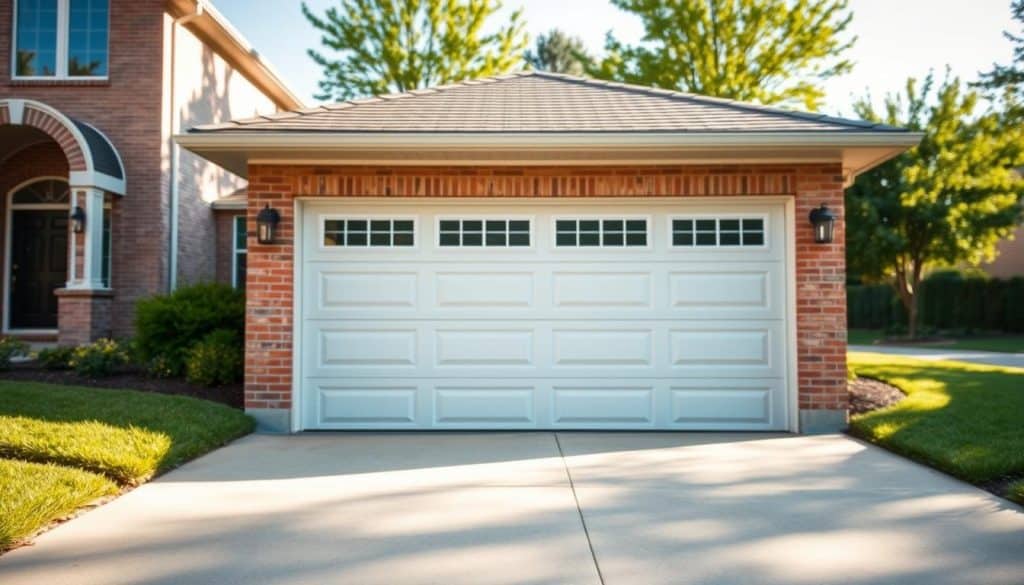
Single-car doors usually range from 8 to 10 feet wide and 7 to 8 feet high. Common picks include 8×7, 9×7, and 9×8. A 9-foot width often adds mirror clearance and easier entry for modern cars.
Double-car options
The usual double-car size is 16×7. Widths can run from 12 to 20 feet to fit different frame layouts. Consider 18 feet if you park larger SUVs or want more side space.
RV and oversized doors
For tall vans and RVs, plan for 10–12 feet wide and 12–14 feet high. Extra height avoids roof-rack conflicts and provides safe clearance for trailers.
Triple-bay layouts
Triple garages often use three single doors or one single plus a double. One large three-bay door is custom and needs structural review. We recommend on-site measurement to confirm track, spring, and opener pairing.
- We guarantee all installs and parts.
- Call (407) 788-1229 for an in-person assessment and precise dimensions.
- We help choose the best layout for space, performance, and value.
How to measure your opening and plan clearance for a new garage door
Before ordering, take simple steps to measure the opening and confirm enough clearance for a smooth install.
Opening, side room, headroom, and backroom: the core measurements
Measure the width and height of the opening. Check that the frame is square and level. Note any floor slope when you measure height.
Side room is critical for track and torsion hardware. Aim for about 3.75 inches per side to avoid tight fits.
Measure headroom from the top of the opening to the ceiling. Then measure backroom to the rear wall so tracks and springs fit properly.
Ceiling clearance for the opener and track: 14-18 inches recommended
Minimum headroom is six inches, but we recommend 14–18 inches of ceiling clearance for most operator systems. That avoids rail interference and simplifies maintenance.
Building codes and HOA considerations before you buy
Always check local codes and HOA rules for style, windows, and finish. Document your measurements and take photos of mounting corners.
- We take precise on-site measurements and verify code and HOA requirements.
- Our technicians are background-checked and available 24/7 for scheduling.
- Call (407) 788-1229 or email EmeraldGarageDoorServices@gmail.com for an accurate assessment.
what sizes do garage door come in for your vehicles and space
Picking the right opening affects how easily you park and how much storage space remains. We tailor recommendations to your vehicle mix and future plans. Then we install the right system with a strong warranty.
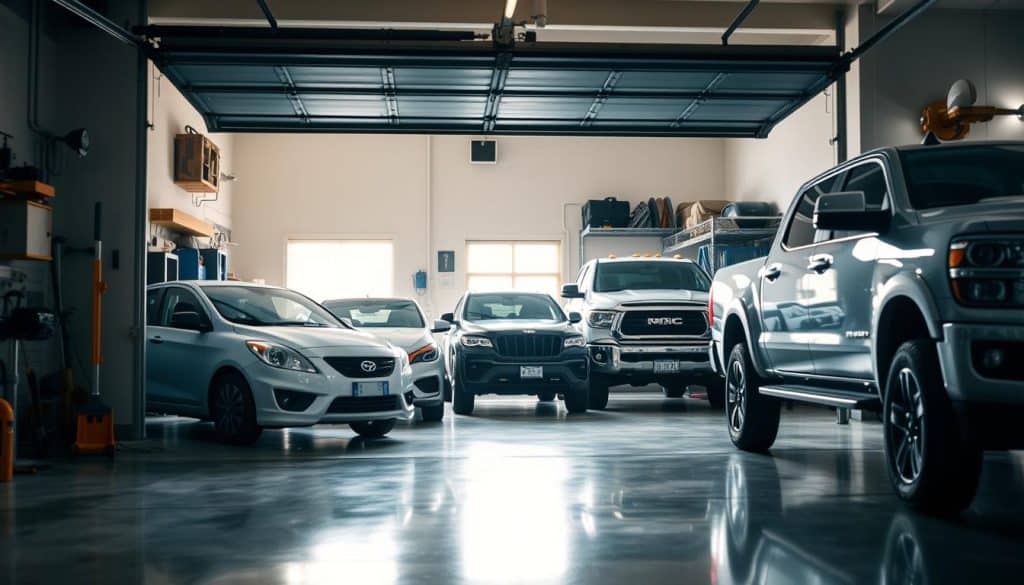
Sedans and small cars: why 9×7 often beats 8×7 for comfort
A 9×7 single offers extra mirror clearance and easier entry. An 8×7 can feel tight when doors swing or when racks are fitted.
SUVs, crossovers, and pickup trucks: when 10×8 or 16×8 makes sense
Larger vehicles benefit from a 10×8 single or a 16×8 double garage option. These choices handle lift kits, roof racks, and safe clearance for cargo.
One-, two-, three-, and four-car layouts: choosing widths, heights, and layouts
One-car openings commonly range from 8×7 to 9×8. Two-car setups are usually 16×7 or 16×8.
- We explain why 9×7 improves daily use for sedans and compact SUVs.
- We show when 10×8 singles or a 16×8 double suit larger trucks and SUVs.
- We review measurements so the width height you choose fits your area and storage needs.
Call (407) 788-1229 for a no-pressure consultation. We measure on site and match the right type and standard garage door to your cars and space.
Residential vs. commercial garage door sizes: choosing by use case
A property’s use determines the ideal width and height for efficient access and safety. We match options to traffic, equipment, and workflow so openings work reliably every day.
Service stations and auto bays
Service bays typically measure about 10 feet wide by 8–10 feet high. This spread allows technicians to move around vehicles and use lifts safely.
Warehouses and industrial
Warehouse openings often run 12–14 feet wide with heights around 14–16 feet. Industrial entrances can expand to 14–32 feet wide and 16–24 feet high
These larger openings support forklifts, pallets, and heavy equipment without bottlenecks.
Retail and showroom
Retail and showroom options usually range 12–16 feet wide. Many use glass-paneled designs to blend curb appeal with secure performance.
- We compare residential needs to commercial demands and match the right door size to function.
- We assess energy, security, and visibility trade-offs for oversized openings.
- We provide on-site recommendations across Central Florida with rapid response and guaranteed workmanship.
Call (407) 788-1229 for a site assessment and a precise recommendation that protects value and supports daily operations.
Custom garage door sizes: when nonstandard widths or heights are the right fit
Historic facades and oversized campers often require tailored openings and expert planning. We build to your architecture and use case. Our work keeps style and function aligned.
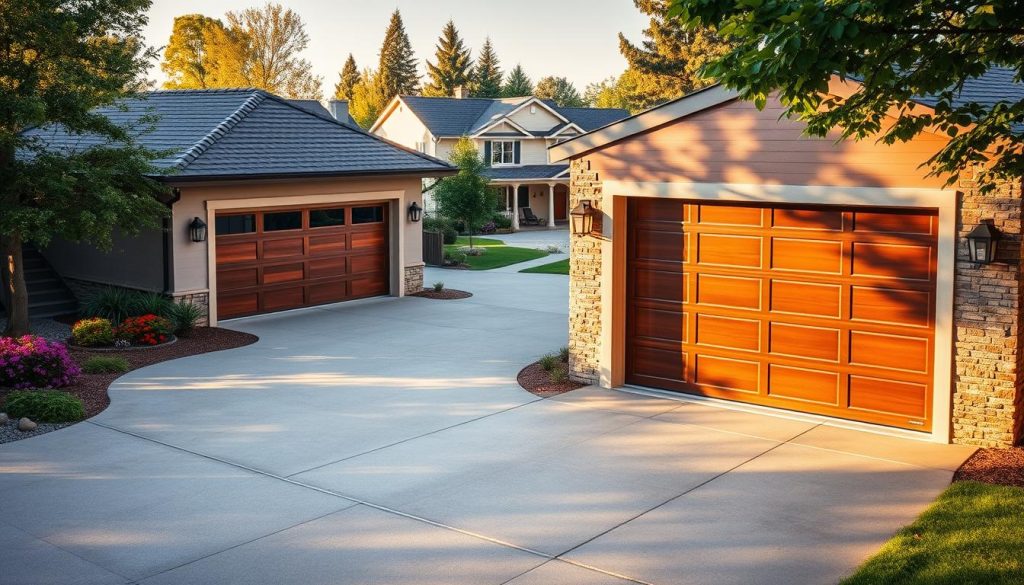
Unique architecture and aesthetic designs that need tailored dimensions
Arched or asymmetrical frames need custom solutions. We match panel styles, glass, and finishes to preserve the façade.
We explain when tailored dimensions protect the look and ensure precise frame alignment.
Oversized or specialty vehicles: RVs, lifted trucks, and boats on trailers
Many tall rigs need about 10–12 feet of width and 12–14+ feet of height for safe clearance. Custom openings prevent rubbing and roof-rack conflicts.
- We cover how bespoke sizes ensure safe clearance for vehicles and accessories.
- We detail structural and hardware impacts when you extend width or height.
- We follow an example path: measure, engineer, choose finishes, match opener, schedule install.
- We verify dimensions to protect seals and extend system life.
We stand behind custom projects with licensed, insured, and bonded guarantees. Speak with our specialists at (407) 788-1229.
Planning for performance: side room, headroom, opener type, and long-term needs
Plan clearances and hardware early so your installation runs without surprises. We design systems around exact measurements and future plans. This saves time and preserves value.
Track systems, torsion springs, and side room
Side room of about 3.75 inches per side supports torsion springs and track hardware. We match track systems to door weight and confirm side room before install.
Future-proofing width and height for changing vehicles and storage
Allow more width and height if you expect taller vans or added storage. A small extra of a few feet reduces replacement risk later. We review garage door sizes against your needs and suggest the best size for long-term use.
Budget ranges: single, double, and oversized/custom doors
Typical budgets guide decisions: single-car doors $500–$1,500; double-car $1,000–$3,000; oversized/custom $3,000+. We explain how insulation, windows, and finishes affect total cost and value.
- We verify headroom and ceiling clearance and pick the right opener: chain, belt, direct drive, or wall-mount.
- We assess measurements and structure to prevent surprises on install day.
- We add recommended safety features like photo-eyes, auto-reverse, and smart controls.
- We stand by our installs with guaranteed parts and labor and 24/7/365 service for your new garage system. Call (407) 788-1229 or email EmeraldGarageDoorServices@gmail.com for estimates.
Conclusion
A smart measurement and selection step ensures smooth daily use for your vehicles.
Choose a standard garage door when it fits your plans. Pick a custom option if oversized rigs or a unique opening require it. Proper measurement and clearance keep the install fast and reliable.
We recap: the right size and opener protect long-term value and make parking safer for current and future vehicles. One careful decision today saves costly changes later.
Emerald Garage Door Services offers 24/7/365 repair, installation, and maintenance across Central Florida. We are family-owned, licensed, insured, and bonded. Our background-checked techs guarantee parts and labor. Call (407) 788-1229 or email EmeraldGarageDoorServices@gmail.com for a tailored recommendation and on-site visit.
FAQ
What are the common residential door widths and heights?
Standard single openings are usually 8 to 10 feet wide and 7 to 8 feet high. Common sizes you’ll see are 8×7, 9×7, 9×8 for single bays and 16×7 for a typical double bay. These dimensions balance cost, usability, and curb appeal.
How do double and triple layouts differ in size and value?
A double bay most often uses a 16×7 panel, though widths from 12 to 20 feet exist for double configurations. Triple layouts use either three single doors or a single plus a double. Triples raise material and installation costs, but they offer flexible vehicle access and can boost resale value when well designed.
What dimensions do RV and oversized doors require?
RV and specialty openings tend to start at 10–12 feet wide and 12–14 feet high. Measure clearance for roof racks and A‑frames. We recommend confirming vehicle height and trailer tongue length before ordering a nonstandard panel.
How should I measure the opening and plan for clearance?
Measure the clear width and height of the rough opening. Also record side room (space each side of the opening), headroom (above the opening), and backroom (depth inside the garage). These four numbers determine track choice and opener placement.
How much ceiling space does an opener and track need?
Most standard torsion and extension track systems need 14–18 inches of headroom for a sectional door. Low‑headroom kits exist for tighter spaces, but they may cost more and require specific panels.
Do building codes or HOA rules affect choice of door dimensions?
Absolutely. Local codes and homeowners associations can restrict door style, color, and in some cases size or setback. Check Orlando municipal codes and your HOA guidelines before buying or ordering custom panels.
Which dimensions suit sedans, SUVs, and pickups?
For sedans, a 9×7 door provides easier entry and less risk of mirror strikes than an 8×7. SUVs and trucks often benefit from 10×8 single doors or 16×8 double panels to accommodate height and width. Always measure your vehicle’s widest and tallest points before deciding.
How do commercial sizes differ from residential ones?
Light commercial bays like service stations are commonly about 10 feet wide by 8–10 feet high. Warehouses and industrial doors often start at 12–14 feet wide and 14–16 feet high or larger. Retail and showroom openings typically use 12–16 foot widths with design features for visibility.
When is a custom door the right choice?
Choose custom panels when architecture, nonstandard vehicles, or aesthetic goals require unique widths or heights. Customization allows integrated glass, special materials, and precise fit for arches or tall facades.
What side room and track clearances are needed?
Typical side room for standard torsion systems is about 3.75 inches per side. Track and spring systems vary, so confirm requirements for your chosen hardware. Tight side clearances may need low‑headroom or jamb‑mounted options.
How should we future‑proof our choice for changing vehicles or storage?
Add a foot or two of width and height beyond current needs when possible. A slightly larger opening improves maneuverability and accommodates future bigger vehicles or added storage lifts without costly replacement later.
What budget ranges should we expect for single, double, and custom doors?
Basic single sectional doors are the most affordable. Double panels cost more for materials and larger hardware. Oversized or fully custom doors increase price further due to bespoke fabrication and specialized installation. We provide tailored estimates for Orlando homes and businesses.
Who can help confirm measurements and choose the right door?
Emerald Garage Door Services offers on‑site measurement, product guidance, and professional installation across Orlando and nearby areas. We assess openings, recommend headroom solutions, and match panels to your needs and budget.