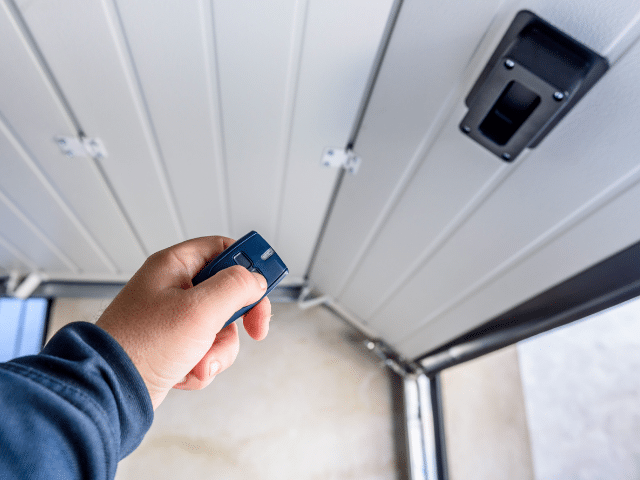
Curious How Does Garage Door Opener Work? We explain the powered heart of a residential garage door in plain terms so you feel confident about its operation.
At a high level, a motor drives a trolley that lifts or lowers the panel. Safety sensors stop and reverse motion if something blocks the beam. Drive types — chain, belt, screw, or side‑mount — change noise and strength, and typical motors range from 1/3 to 1½ HP.
We stand behind our work: every technician is background‑checked, licensed, insured, and bonded. All parts and labor carry a guarantee. We are available 24/7/365 — call (407) 788-1229 or email EmeraldGarageDoorServices@gmail.com for prompt, local help.
Key Takeaways
- A powered unit moves a trolley to lift and lower your entrance safely.
- Safety sensors and an emergency release protect people and let you go manual.
- Drive type and motor size affect noise and reliability.
- Proper balance and setup extend service life and reduce repairs.
- We offer guaranteed service, vetted technicians, and 24/7 support in Central Florida.
What a Garage Door Opener Does and Why It Matters Today
Reliable powered systems keep your main entrance moving smoothly and protect people and property. A garage door opener lets you push a button to open close the panel from a wall switch, remote, keypad, or phone app.
Daily use adds up fast. Many households reach 1,000–1,500 cycles per year. That repeated operation makes a dependable opener essential for convenience and safety.
Modern systems pair motor power with counterbalance springs. That teamwork lifts weight efficiently and reduces wear on the opener and tracks.
- Built‑in safety features like auto‑reverse and photo sensors cut entrapment risk.
- Smart controls, remotes, and wall panels make access simple for every family member.
- Regular maintenance prevents premature failures and preserves home security.
We serve homeowners and businesses across Central Florida. Our licensed, insured, bonded team offers 24/7/365 repairs, installs, and tune‑ups to keep your system reliable and secure.
How does garage door opener work
From signal to travel:
Pressing a remote sends a radio message to the receiver. The receiver validates a synchronized code and then powers the motor to begin motion.
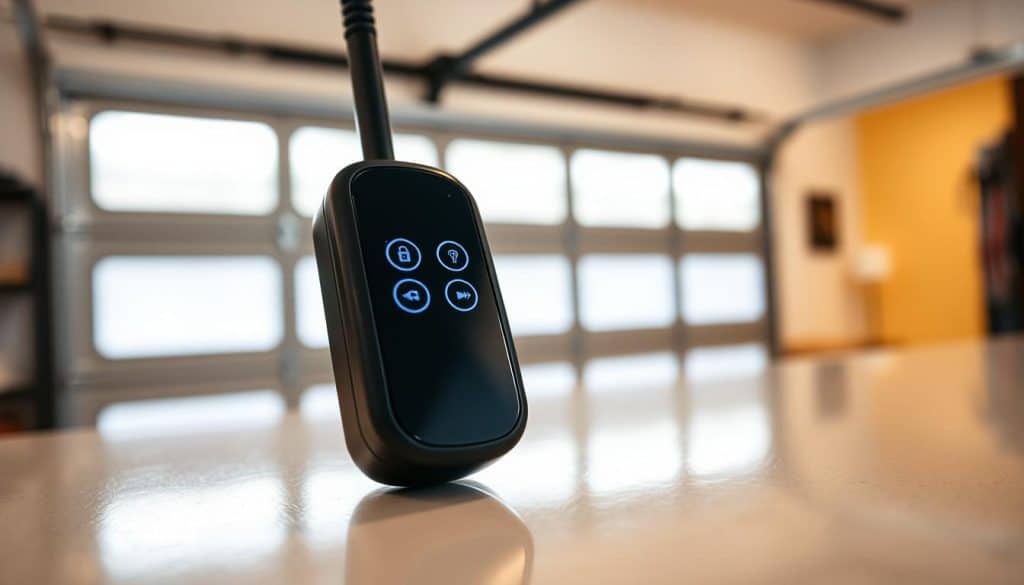
From button press to motion: radio signal, receiver, and motor
We press a transmitter and it broadcasts a secure code on a set frequency. The receiver checks that code. If valid, it tells the motor to start.
Motor moves trolley: how the drive lifts a balanced residential garage door
The motor drives a trolley along a T-rail. The trolley links to the door arm and bracket, translating rotary power into straight-line travel to lift a balanced panel.
Many units convert AC to DC for a soft start and stop. That reduces noise and stress on parts.
Rolling code security: why modern remotes don’t open the wrong garage
Modern transmitters use rolling codes so each press generates a new code. This prevents replay attacks and accidental openings nearby.
- We verify radio path and antenna placement when range drops.
- We check spring balance so the opener isn’t lifting full weight.
- When transmitter and receiver fall out of sync, a quick resync restores normal operation.
We make complex mechanisms easy to understand and service, ensuring safe, smooth performance for families and businesses 24/7/365.
Core parts of a garage door opener system
Key components transform electrical power into controlled travel, keeping your entrance safe and balanced.
Drive unit, motor, gears, and T‑rail
The drive contains the motor and gears that convert electricity into motion. A T‑rail guides the chain, belt, or screw along a fixed path.
Trolley, curved arm, and bracket connection
The trolley links to a curved arm and the door bracket. This secure coupling transfers motion from the rail to the panel with precise alignment.
Tracks, rollers, and counterbalance springs
Horizontal tracks and rollers keep travel straight. Torsion springs, drums, and cables offset weight so the opener only guides the door, not lift all of it.
Controls, power backup, and safety devices
Wall controls, remotes, and a keypad give access. An inverter and battery backup protect electronics and allow operation during outages.
Photo eye sensors sit low to sense obstructions and trigger auto‑reverse. The red emergency release rope disconnects the carriage for manual use if needed.
- We service and replace all listed parts, from motor to springs.
- We guarantee parts and labor and respond any time across Central Florida.
- We ensure correct antenna and wall placement for reliable range and safety.
Types of garage door openers: chain, belt, screw, and direct drive
Not all drives suit every layout. We outline the main types so you can match performance to budget and space.
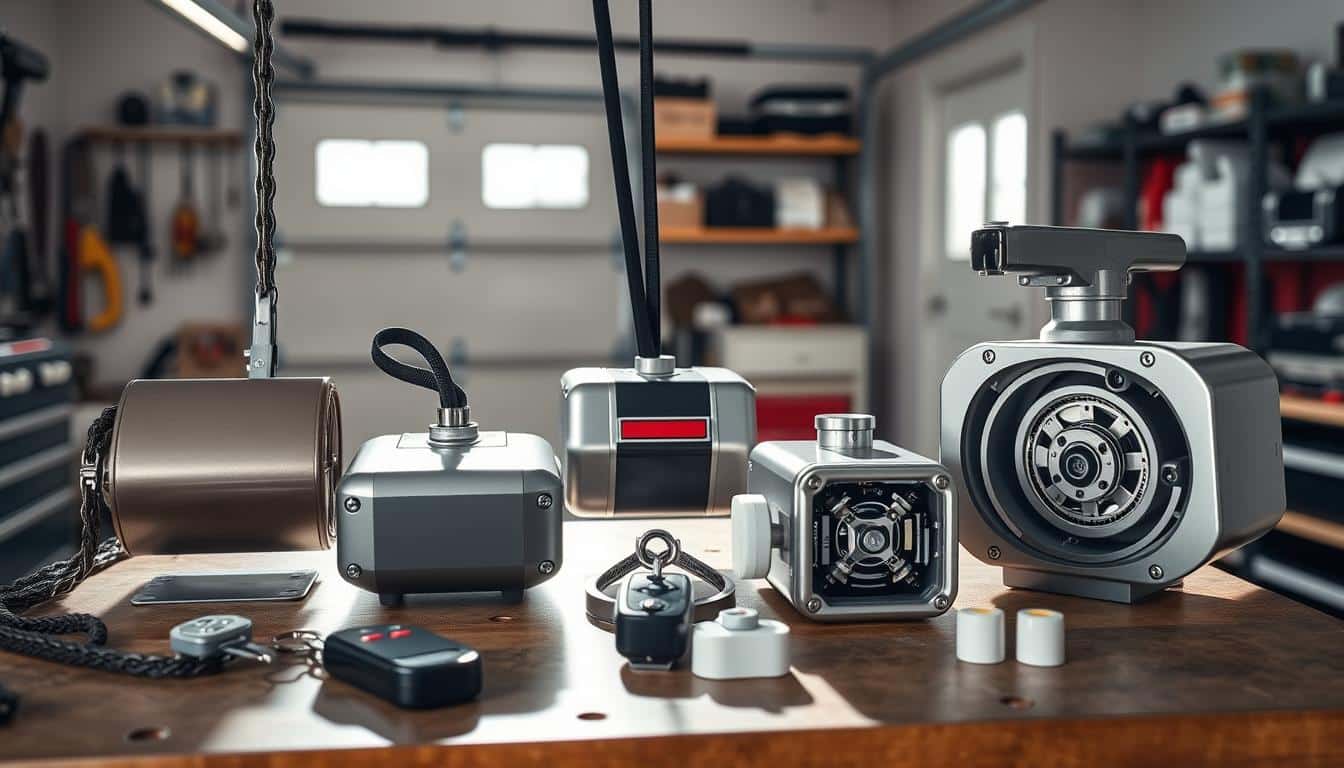
Chain drive: durable and economical for detached spaces
Chain drive uses a metal chain. It costs less and lasts under heavy use. Expect more noise, so it fits detached structures or places away from bedrooms.
Rubber belt drive: quiet operation with less vibration
Belt drive uses a reinforced rubber belt. It runs quietly with low vibration. Choose this when living spaces sit near the garage.
Screw drive: threaded rod simplicity and smooth motion
Screw systems turn a threaded rod to move the trolley. Fewer parts mean lower routine maintenance and smooth travel for moderate use.
Direct/side-mount (Jackshaft): wall-mounted when ceilings limit options
Side-mount units attach to the wall beside the door. They reduce moving parts and free ceiling space. Check header strength and side clearance before install.
- We compare noise, maintenance, and longevity across drives to match your needs.
- We explain how belt and chain materials affect stretch and tensioning under daily cycles.
- We help you choose the best type and install it with guaranteed parts and labor—day or night.
Power, force, and sizing your opener for your door
Selecting the right unit starts with matching power to panel size and expected cycles.
Horsepower ranges run from 1/3 HP for small single panels to 1–1/2 HP for heavy or high‑cycle installations.
Motor choices and why balance matters
AC motors are common and reliable. Many systems convert AC to DC for a soft start, variable speed, and quieter operation.
A well‑balanced panel cuts required force and extends life for both springs and the opener. An opener should never compensate for a binding or unbalanced door.
- We match horsepower to panel size, construction, and usage so the unit has reserve power.
- We set force per manufacturer specs to protect the motor and the panel from excess push or pull.
- We pair drive selection with motor capacity to reach your preferred noise and performance levels.
We assess springs, tracks, and expected cycles before recommending a garage door opener. We then present a clear proposal with the right type, features, and warranty backed by our satisfaction guarantee.
Safety and security features every modern opener needs
Every system we install must meet strict reversal and sensing rules before we call the job complete. We follow the 2018 CPSC residential standard and test each function on site.
CPSC residential standard: reversing, entrapment sensing, 30‑second reopen, and manual release
The standard requires a reversing mechanism that flips within two seconds if blocked. It also supports external entrapment sensors, a 30‑second clock to reopen if the panel fails to fully close, and a manual release for emergencies.
Photo eyes vs. mechanical reversal: two layers of protection
Photo eyes project a beam 4–6 inches above the floor. If the beam is broken, the panel reverses. Mechanical reversal senses resistance and stops travel. Together they reduce risk to people and pets.
Rolling/hopping codes and smart integrations for secure operation
Modern transmitters use rolling code technology so each press sends a new code. This prevents replay attacks and keeps remote access secure. We also link smart devices safely so app control does not weaken security.
- We test reversal within two seconds and the 30‑second reopen.
- We verify manual release and sensor alignment before we leave.
- We implement rolling code setup and document all settings for your records.
Troubleshooting and maintenance: quick wins before you call
A few quick checks can get your entrance moving again in minutes. We’re here 24/7/365, but these steps often save time.
When the unit won’t open or close: start with the basics. Replace remote batteries and confirm the wall lock button is off. Check that the antenna is intact and pointing down. A blocked photo eye or misaligned sensor will prevent a full cycle and trigger a reversal.
Operational hiccups and simple fixes
Inspect tracks and rollers for debris, dents, or loose fasteners. Small obstructions can bind travel and stop the panel from moving. Clean and lubricate rollers and hinges for smoother motion.
- Verify photo eye alignment and clear the beam path so the system allows a full pass.
- Test slight limit or force changes if the panel won’t reach the stop or keeps reversing; we set these to manufacturer specs.
- Never attempt spring or cable repairs yourself. These parts store dangerous energy; we handle them with trained crews and proper tools.
We also offer maintenance plans and repair options to catch wear early and keep your garage door opener reliable year‑round. If you’re unsure, call (407) 788-1229 and we’ll handle it safely.
Opener installation, upgrades, and 24/7 service in Central Florida
Local technicians provide tailored solutions that match your home’s layout and daily use. We are family-owned and treat your property with care. We guarantee parts and labor and arrive when we say we will.
Emerald Garage Door Services is licensed, insured, bonded, and background-checked. We serve Orlando and surrounding Central Florida communities with fast, respectful service.
Repair, installation, maintenance, and smart options
We install and service ceiling-mounted units and side-mounted solutions that free overhead space. We handle repairs, replacements, and upgrades for homes and light commercial garages.
- Compare belt and chain traits, from chain drive durability to rubber belt quietness for living-adjacent house areas.
- Retrofit keypads, remotes, and smart controls for easy access and activity logs.
- We verify sensors, limits, and torque, then document results before we leave.
We respond quickly across Central Florida with stocked vehicles and vetted technicians who respect your time and property. Clear pricing, written warranties, and a satisfaction-first process remove surprises.
Call (407) 788-1229 or email EmeraldGarageDoorServices@gmail.com for 24/7/365 support. We’ll get an expert to your door when you need us.
Conclusion
Modern units pair secure codes, balanced springs, and precise travel for dependable operation.
We recap that a complete operator setup uses a validated rolling code, a responsive motor that moves the trolley, and a guided drive for smooth, quiet cycles. Proper sizing (1/3–1½ HP) and correct force and limit settings protect the unit and the panel.
Safety items — aligned photo eyes, tested reversing, and an emergency release — enable manual access during outages. Balanced springs reduce strain and extend service life.
Regular maintenance, clear tracks, and timely belt drive or chain checks keep performance steady. Choose the right type based on space, noise needs, and duty cycle.
We stand by our work with a full guarantee on parts and labor. As a family‑owned team, we offer honest advice and 24/7/365 support across Central Florida. Call (407) 788-1229 or email EmeraldGarageDoorServices@gmail.com.
FAQ
How Does Garage Door Opener Work? Expert Insights
We explain the sequence from remote press to motion. A radio signal reaches the receiver, the motor engages the drive, and a trolley moves along a T‑rail or shaft to lift a balanced residential door. Safety sensors and an emergency release ensure safe, manual override when needed.
What a Garage Door Opener Does and Why It Matters Today
An opener automates access, improves security, and protects vehicles and property. Modern units add battery backup, smart integrations, and rolling code security to keep your home safe and convenient.
From button press to motion: radio signal, receiver, and motor
A handheld remote or keypad sends a coded radio signal. The receiver decodes it and tells the control board to power the motor. That motor drives gears or a shaft, moving the trolley or carriage that lifts the door.
Motor moves trolley: how the drive lifts a balanced residential garage door
The motor turns a chain, belt, screw, or internal mechanism tied to a trolley. That trolley pulls the curved arm attached to the door bracket, translating linear motion into a smooth lift while counterbalance springs carry most of the weight.
Rolling code security: why modern remotes don’t open the wrong garage
Rolling code systems change the access code after each use. This prevents replay attacks and keeps remote signals unique so neighboring systems and would‑be intruders can’t reuse a captured code.
Drive unit, motor, gears, and T‑rail (drive guide)
The drive unit houses the motor and gearbox and guides the trolley along the T‑rail or shaft. Quality components reduce noise and extend lifespan. Proper installation ensures alignment and smooth travel.
Trolley, curved door arm, and door bracket connection
The trolley connects to the curved arm, which bolts to the door bracket. This linkage transfers motion from the opener to the door while allowing the door to follow its rollers and tracks safely.
Tracks, rollers, chain/belt/screw, and counterbalance springs
Tracks and rollers guide the door. The drive type—chain, belt, or screw—moves the trolley. Torsion or extension springs counterbalance the door weight, so the motor only needs to overcome friction and acceleration.
Wall control, remote control, keypad, antenna, and battery backup
Wall consoles and wireless remotes offer control. Keypads give keyless entry. An antenna improves reception. Battery backup keeps operation available during power outages for safety and access.
Photo eye sensors and the emergency release rope
Photo eyes create an invisible beam near the floor; if broken, the opener stops or reverses. The emergency release rope lets you disconnect the trolley for manual operation during power loss or maintenance.
Chain drive: durable and economical for detached garages
Chain drives use a metal link and are cost‑effective and robust. They’re ideal for detached or less noise‑sensitive locations, though they produce more vibration than belt systems.
Rubber belt drive: quiet operation with less vibration
Belt drives use a reinforced rubber belt for near‑silent performance. They reduce vibration and are preferred for attached garages and homes where noise matters.
Screw drive: threaded rod simplicity and smooth motion
Screw drives move a trolley along a threaded rod. They have fewer moving parts and provide smooth, consistent travel, especially in moderate climates with good maintenance.
Direct/side‑mount (Jackshaft): minimal moving parts and wall‑mount options
Jackshaft units mount on the wall beside the door and turn the torsion shaft directly. They free up ceiling space and suit tall or specialty doors with limited headroom.
Horsepower ranges (⅓ to 1½ HP) and door size/usage
Choose horsepower based on door weight and use. Lighter, single doors often need ⅓–½ HP. Heavier or high‑use doors benefit from ¾ HP or higher for reliable service life.
AC vs. DC motors, variable speed, and why balance matters
AC motors are durable and simple. DC motors offer variable speed, smoother start/stop, and quieter operation. A properly balanced door reduces strain and extends motor life.
CPSC residential standard: reversing, entrapment sensing, 30‑second reopen, and manual release
Modern openers must reverse on obstruction, include entrapment protection like photo eyes, automatically reopen within 30 seconds if blocked, and provide a manual release for emergencies.
Photo eyes vs. mechanical reversal: how they prevent injuries
Photo eyes detect objects in the door path and stop or reverse movement. Mechanical reversal trips when the door encounters resistance. Together they meet safety standards and reduce risk of injury.
Rolling/hopping codes and smart integrations for secure operation
Rolling or hopping codes change encryption frequently. Smart integrations add app control, notifications, and safe remote access when paired with secure platforms and two‑factor authentication.
When the door won’t open or close: batteries, lock button, antenna, and sensor alignment
Check remote batteries, ensure the wall lock isn’t engaged, verify the antenna hangs free, and align photo eyes. These quick checks solve many common failures before calling for service.
Operational hiccups: height/force adjustments, tracks/rollers, and debris
Inspect tracks for dents, clear debris, and lubricate rollers. If the opener binds or the door stops short, the force and travel limits may need adjustment by a technician.
Emerald Garage Door Services: licensed, insured, bonded, background‑checked
We are fully licensed, insured, and bonded. Our technicians are background‑checked and trained to handle repairs, installations, and maintenance across Orlando and nearby communities.
Repair, installation, maintenance, and smart opener options
We offer full service—repair, new installs, preventive maintenance, and help selecting smart openers, belt or chain drives, and battery backup options tailored to your property.
Call or email Emerald Garage Door Services—available 24/7/365
Reach our dispatch team at (407) 788-1229 or email EmeraldGarageDoorServices@gmail.com for emergency service, estimates, or scheduling. We’re available day and night to keep your entry secure.