Have you ever wondered why a heavy panel can suddenly feel unmanageable or move with jerky steps?
We answer that question and show what to watch for. Our team serves Orlando and Central Florida with repair, installation, and maintenance for every garage door. We explain what a proper garage door spring adjustment involves so you know the task before anyone touches parts.
Springs counterbalance weight and store energy in two main setups. You may see torsion springs above the opening or extension springs along the tracks. Signs of a problem include uneven travel, a heavy feel, or an opener that struggles. We emphasize safety and the right tools. Our technicians are licensed, insured, and background-checked. We offer 24/7/365 service and guarantee parts and labor.
Key Takeaways
- We outline when a garage door spring adjustment is needed and why safety matters.
- Learn to spot torsion vs. extension springs and signs of imbalance.
- Understand basic tension checks and why solid steel winding bars matter.
- Regular maintenance reduces wear and keeps travel smooth.
- For expert, same-day help call (407) 788-1229 or email EmeraldGarageDoorServices@gmail.com.
Understand the task, intent, and safety before you start
Preparation defines success—know the goal and put safety first every time. We aim to restore smooth travel and correct balance so the garage door stays put when stopped halfway. That clarity guides each move and reduces risk of injury.
Before any work, unplug the opener and add bright, steady lighting. Keep all tools with you and plan an alternate exit so you are never forced to reach outside while a job is active.
Springs are under load when the door is closed. That increases tension and the chance of sudden release. Use only proper steel winding bars, not makeshift drivers, and fit them into the cone holes to prevent slippage.
Follow a simple intent sequence: secure, measure, adjust, verify. Move in small increments, retest balance often, and stop immediately if you see a broken coil, visible gaps, or warped hardware—those require replacement, not tuning.
- Define the goal: smooth travel and neutral balance.
- Know system type: torsion and extension springs behave differently.
- Keep an exit path and all tools inside before beginning.
- If you feel unsure at any step, call our 24/7 team in Central Florida.
Safety preparation and setup for adjusting garage door springs
We protect your home and your family. Start by closing the opening and unplugging the opener. Make sure bright, steady lighting fills the work area so you can see springs, cables, and hardware clearly.

Secure the door with C-clamps or locking pliers placed on the tracks just above the bottom rollers. This prevents sudden movement while you work.
- Disconnect power and confirm lighting so all parts are visible.
- Clamp the track above the bottom rollers to hold the door steady.
- Wear safety glasses, gloves, and closed-toe shoes for stable footing.
Stand to the side of the winding bar, not in line with the cone. Use 18–24 inch solid steel winding bars — never screwdrivers or adjustable wrenches. Inspect shaft flats and replace worn set screws to improve holding power.
Keep tools within reach inside the bay and keep family and pets away until testing is complete. If any component looks damaged or the prep feels risky, stop and call us. We’ll dispatch a licensed, insured technician any time. Call (407) 788-1229 for same-day service.
Essential tools and parts you’ll work with
Precision begins with the set of tools you bring to the service call. We arrive stocked with professional-grade gear and manufacturer parts to deliver safe, reliable results.
Winding bars versus makeshift tools
Use solid steel winding bars. The cone accepts bars in its four holes for controlled, quarter-turn moves. Makeshift drivers can slip and cause damage or injury.
Winding cone, set screws, and shaft flats
The cone has four winding holes and two set screws that lock to the shaft flats. Measure the cone hole diameter so winding bars fit snugly and do not twist under load.
Seating set screws into the shaft flats improves hold. We use an adjustable wrench and avoid over-torquing to protect threads.
Locking pliers, ladder, and safety cables
- Locking pliers clamp the track to prevent unwanted movement during work.
- Safety cables run through extension springs to contain a failure and protect the interior.
- A stable ladder set slightly to the side helps maintain safe posture while inserting and turning bars.
Our trucks carry replacement parts so we can repair or replace components on-site if a quick tune-up becomes a larger repair. That keeps your system precise and dependable.
garage door spring adjustment
We begin with safety and a clear plan. Start by closing the panel, unplugging the opener, and clamping both tracks above the bottom rollers so the unit cannot drift.
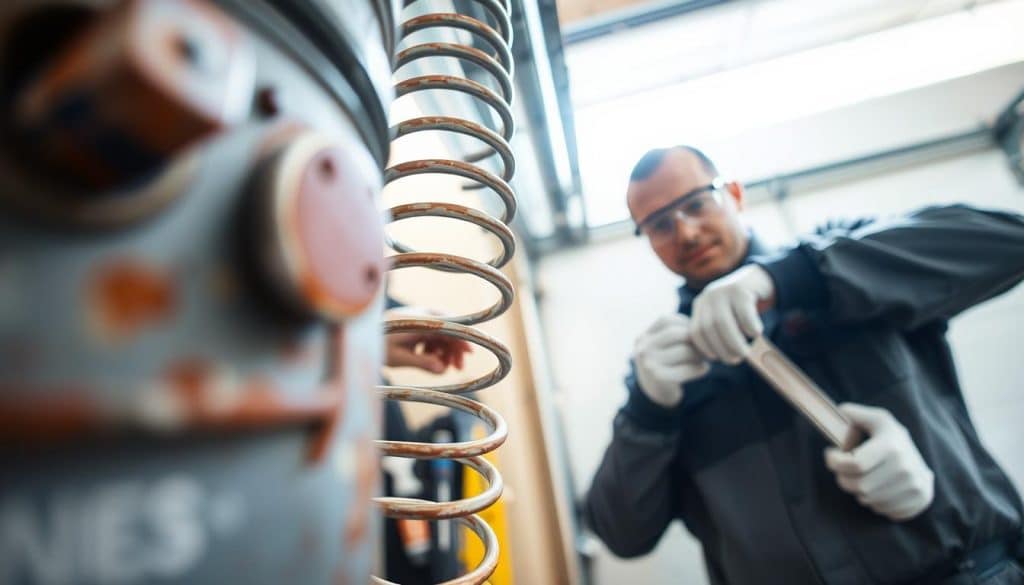
Close the door, unplug the opener, and clamp tracks to prevent movement
Secure the work area. Mark the current position on the winding cone and shaft so you can track each quarter-turn and return to baseline if needed.
Mark settings and insert the first winding bar
Insert the first winding bar into the winding cone and hold it firmly. While steady, loosen set screws carefully so the coil does not spin out of control.
Quarter-turn changes, stretch, and retighten
Make quarter-turns to increase tension when the door feels heavy or to decrease tension when it rises on its own. Stretch the coil about 1/4 inch before you tighten set screws to prevent binding.
- Always insert the second bar before removing the first.
- Test balance at the halfway point and repeat in small increments.
- Adjust both torsion springs equally on two-spring systems for straight lift.
If anything feels unsafe or you see damage, stop and call us. We’re available 24/7/365. All parts and labor are guaranteed and our techs are background-checked and insured.
How to adjust extension and side-mounted door springs
Open the unit fully and secure it before you touch any hardware. Raise the door to its highest point and clamp it so the extension springs carry no load. This creates a safe working condition for side-mounted systems.
Open and secure the door fully to release spring load
With the opener unplugged, lock the panel open using C-clamps or locking pliers above the bottom rollers. Verify the springs are relaxed before moving hooks or links.
Move the hook to higher or lower holes to change tension
Identify the S- or J-hook and the track hanger holes. Moving the hook closer to the panel increases pull; moving it away decreases pull.
Inspect and reconnect the safety cable before testing
Route the safety cable through each spring and reattach it securely. Adjust both sides evenly and perform a halfway balance check after each small change.
- Check pulleys, cables, and rollers while the system is open.
- Make one-hole changes at a time to control tension and balance.
- If hardware is frayed or worn, we offer same-day replacement to restore safe operation.
Call us any time in Central Florida for professional help if you feel unsure. We adjust or replace extension and side-mounted systems safely and verify safety cables are correct.
Balance checks, opener considerations, and final testing
A simple halfway test tells us if the springs need a little more or a little less twist. Raise the panel to midpoint, then release it slowly. Watch how it behaves under its own weight.
Halfway open test: diagnose whether to add or reduce tension
The rule is clear: if the unit falls, add tension. If it rises, reduce tension by a quarter-turn and recheck.
We repeat this until the panel stays put with only light hand pressure. Then we cycle the unit by hand several times to confirm smooth travel and consistent force.
Reconnect the garage door opener and confirm smooth operation
After manual checks, we reconnect the opener and run a full cycle. We watch for drifting, chatter, or strain that signals more fine-tuning is needed.
- Halfway test coaching: the unit should stay put with minimal hand pressure.
- Interpretation: falls = add tension; rises = reduce by a quarter-turn and retest.
- Opener check: confirm travel limits, photo-eyes, and force settings for safe operation.
- Final steps: demonstrate the emergency release and log quarter-turns and parts changed for future service.
If the opener strains or vibrates after balance is correct, we evaluate its condition and recommend repair or modern replacement to protect your system and improve reliability.
Recommended tension guidelines and charts to reference
Start with the manufacturer’s winding chart whenever possible. Those charts match turns to height, wire size, and typical weight. They give a reliable baseline before any tuning.
Rule of thumb: quarter turns by door height
A common rule is about a quarter-turn per foot of height. Use it as a starting step, then test balance and refine.
- Baseline counts: 6′ ≈ 26 quarter-turns; 7′ ≈ 30; 8′ ≈ 34.
- Wire size and drum diameter change required turns. For example, 7′ doors with 0.250″ wire often need 30–32 turns.
- Increase tension in single quarter-turns after each test when the panel falls. Decrease tension in small steps if it rises on its own.
- Always record turns per spring and firmly seat set screws into shaft flats when complete.
When in doubt, match your unit to the correct chart and use proper winding bars at the cone for safe, repeatable results.
Maintenance to prevent future tension issues
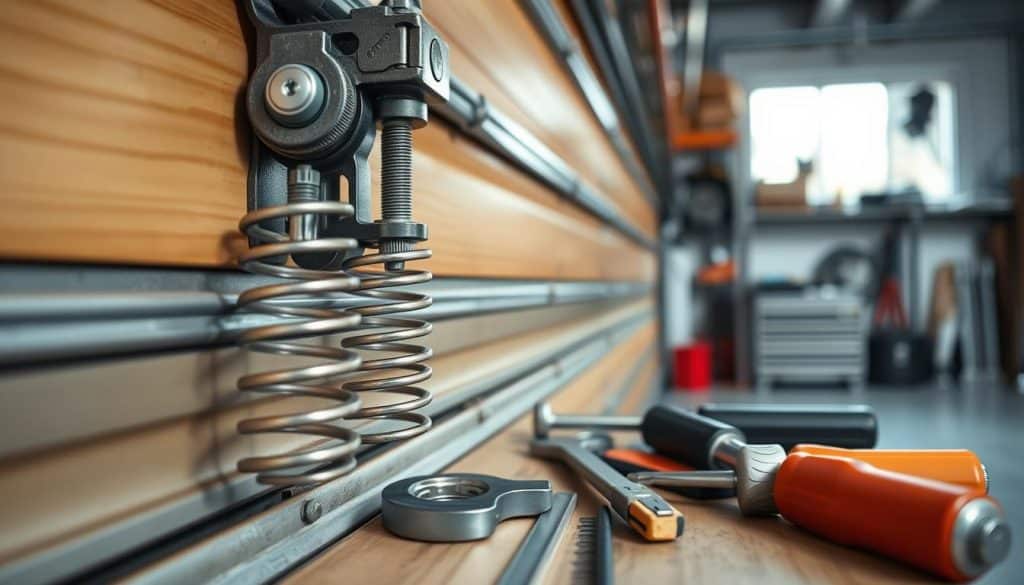
A simple maintenance routine can stop small issues from becoming costly repairs.
Lubricate moving parts twice a year. Use lithium- or silicone-based spray on springs, hinges, bearings, and metal rollers. This reduces friction, quiets noise, and helps the system hold consistent balance.
Avoid common WD-40. It cleans but does not protect. Over time it strips grease and can make parts wear faster. Use a silicone based lubricant instead.
- Biannual lubrication protects components and preserves tension.
- Wipe tracks clean instead of lubricating them to prevent dirt buildup and roller slipping.
- Listen for new squeaks or grinding—these sounds can signal emerging alignment or tension problems.
During service we inspect cables, drums, and fasteners. We also check balance at the halfway point and verify opener force and travel limits. Our maintenance plans in Central Florida save you time and add long-term safety.
Schedule annual professional maintenance to keep warranties valid and parts within spec. We offer reminders and routine visits so upkeep happens on time without extra work for you.
When to call a professional in Central Florida
If you hear a sudden loud bang or notice uneven travel, stop and assess the situation immediately. These signs often mean a broken coil or a failed component that needs replacement, not a quick tweak.
Look for visible gaps or frayed cables. If the panel won’t stay up, if coils show separation, or if the opener strains when lifting, call us. Repeated failed attempts to test balance suggest a deeper problem.
Why safety and proper tools matter
Overtightening or guessing at winding can load bearings, drums, and the opener. That causes early failure and creates safety hazards. We bring the right tools and winding know-how to reset set screws and apply proper quarter-turns without guesswork.
Emerald Garage Door Services — contact and credentials
We serve Orlando and all of Central Florida 24/7/365. Family-owned by James Balfe, we are licensed, insured, bonded, and background-checked. Techs arrive ready to work and back every job with parts and labor guarantees.
- Call (407) 788-1229 for same-day service.
- Email EmeraldGarageDoorServices@gmail.com for scheduling or questions.
Conclusion
A well-tuned system makes daily use safe and nearly silent. A properly balanced garage door holds at halfway. Torsion work uses quarter-turns guided by height and manufacturer charts. Extension systems depend on correct hook placement and safety cables for each door spring.
We showed safe, controlled ways to set tension and confirm balance so the unit moves smoothly. Use the right tools and retest by hand before you reconnect the opener. Lubricate and inspect components routinely to reduce wear over time.
We’re family-owned and available 24/7/365. Our licensed, insured, bonded, and background-checked team serves Orlando and Central Florida. Call (407) 788-1229 or email EmeraldGarageDoorServices@gmail.com to adjust garage door hardware or schedule expert service on your timeline.
FAQ
What should we understand before attempting spring adjustment?
We must identify the task, intent, and safety risks. Torsion and extension types behave differently. Know whether the goal is to balance the panel, reduce opener strain, or replace worn components. If you feel uncertain about tools, torque, or the spring condition, call Emerald Garage Door Services for professional help in Orlando, FL.
How do we prepare the area and protect ourselves?
Disconnect the opener and make sure lighting is adequate. Secure the panel with C-clamps or locking pliers placed just above the bottom rollers to prevent unexpected movement. Wear eye protection, gloves, and sturdy footwear, and stand to the side of the winding area to reduce injury risk.
Which tools and parts are essential for safe adjustments?
Use certified winding bars, not improvised rods. You will also need an adjustable wrench, locking pliers, a ladder, and, for torsion systems, the winding cone and set screws. Safety cables are required for extension systems. Keep replacement springs, bearings, and appropriate fasteners on hand when performing maintenance.
Why are winding bars necessary and why avoid makeshift tools?
Winding bars are solid steel and sized to fit the winding cone. They allow controlled torque transfer. Makeshift tools can bend or slip, causing a sudden release of stored energy and serious injury. Always use the correct bars and keep a firm grip while turning.
What are set screws, the winding cone, and shaft flats, and why do they matter?
The winding cone accepts the winding bar and anchors the spring to the torsion tube. Set screws clamp onto the shaft flat to lock the cone in place. Properly tightened set screws prevent slippage under load. Mark existing positions before loosening to preserve balance settings.
What is the correct initial process for torsion spring adjustment?
Close the panel, unplug the opener, and clamp the tracks to stop movement. Mark current spring settings. Insert the first winding bar fully into the cone, then loosen the set screws slightly while holding the bar. Make quarter-turn increments to increase or decrease tension, resecure set screws, and repeat until the panel balances.
How many turns should we make when adjusting tension?
Make small, quarter-turn adjustments and test after each change. A rule of thumb ties turns to panel height and spring wire size, but exact counts vary. Using minimal increments reduces the risk of overtightening and keeps the system balanced. If unsure, consult Emerald Garage Door Services for accurate winding charts.
How do we safely remove winding bars and finish the torsion adjustment?
After tightening set screws, keep one bar in place while you remove the other. Withdraw bars slowly and maintain control until both are clear. Test the panel balance by lifting halfway; it should stay in place. If it rises or falls, repeat small adjustments until balanced.
How are extension and side‑mounted systems adjusted differently?
For extension types, open and secure the panel fully to release load, then move the end of the spring hook to a higher or lower hole to change tension. Inspect and reconnect the safety cable before testing. Side‑mounted systems may require repositioning of anchors or adjusting cable tension — follow manufacturer guidance or call our team if unsure.
What balance checks and opener considerations should we perform after adjusting?
Perform a halfway open test. The panel should remain stationary; if it moves, adjust tension in small increments. Reconnect the opener and run it through a full cycle, watching for smooth travel and no binding. Adjust the opener force and limit settings only after the panel is balanced.
What maintenance prevents future tension problems?
Lubricate springs, hinges, bearings, and metal rollers with lithium or silicone lubricant regularly. Inspect cables, pulleys, and fasteners for wear. Scheduled tune-ups help catch issues early and extend component life. Avoid using solvents like WD‑40 for long-term lubrication.
When should we call a professional in Central Florida?
Call when a spring breaks, you hear a loud bang, the panel lifts unevenly, or you see visible gaps or damage. Also seek help if you lack the proper winding bars, are unsure of spring counts or wire size, or if set screws won’t hold. Emerald Garage Door Services offers 24/7/365 licensed, insured, bonded, and background‑checked technicians for same‑day service. Call (407) 788-1229 or email EmeraldGarageDoorServices@gmail.com.