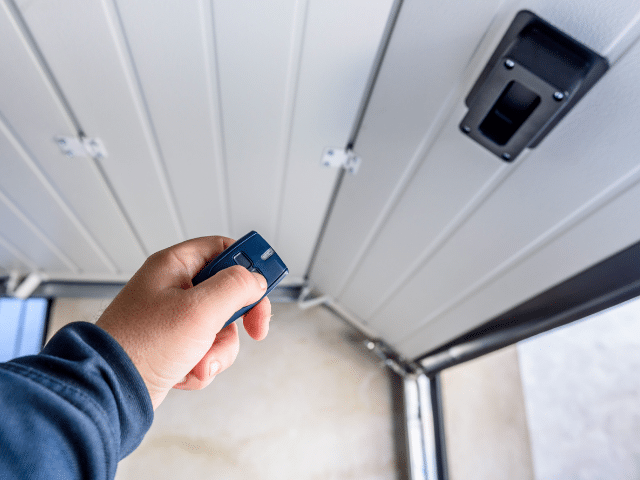
Ever wondered if a simple spray can keep your opener quiet and safe? We start with that question because the right care makes a big difference. The term garage door spring grease points to one small step that helps prevent early wear and noisy operation.
We are Emerald Garage Door Services, a family-owned team serving Central Florida. We believe routine maintenance and smart lubrication keep moving parts running smoothly. Proper care protects springs, rollers, hinges and bearings while reducing stress on openers.
This short intro previews a clear, safe guide you can follow. We explain where to apply product and where not to, and how often to act based on local climate. If you see odd movement or grinding, lubrication alone won’t fix underlying issues—call us any time for help.
Key Takeaways
- Correct lubrication improves performance and reduces noise.
- Targeted care protects critical garage door parts and springs.
- Use silicone sprays or white lithium for lasting results.
- Clean tracks and wipe excess after applying product.
- Schedule service every 3–6 months or call us for problems.
Why garage door spring grease matters right now
Routine care for moving components reduces wear and keeps equipment balanced and quiet. Regular lubrication lowers friction and halts grinding before it damages parts.
Immediate benefits include smoother travel, less noise, and longer life for rollers, hinges, and springs. Proper lubrication also cuts strain on openers and helps prevent costly repairs.
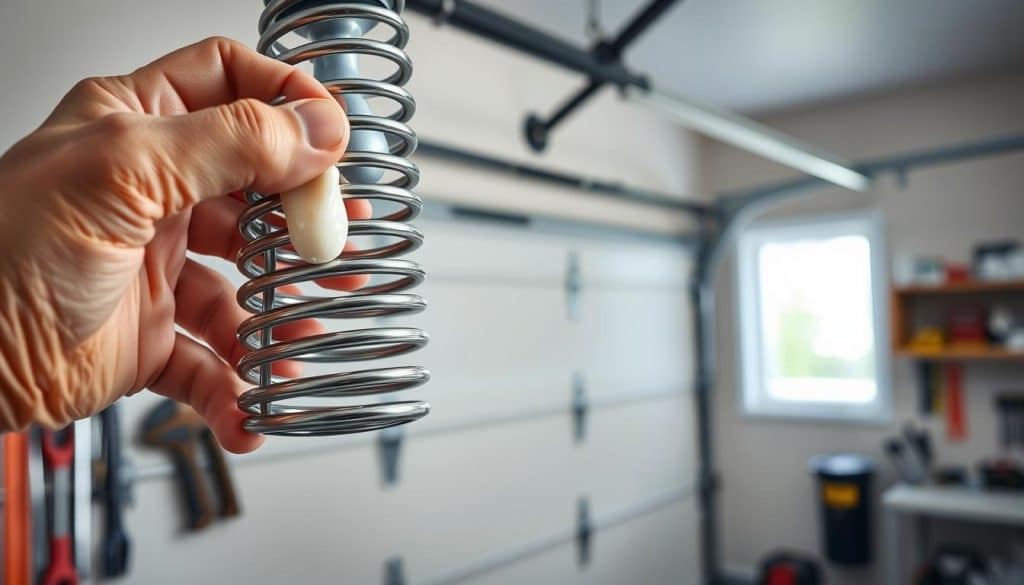
Safety first: inspect and tighten hardware before you apply any lubricant. Replace worn rollers or bent hinges and confirm the opener chain isn’t loose so you don’t mask real issues.
- Most homes should lubricate every three to six months; coastal or extreme climates need closer checks.
- Document your schedule so you often lubricate garage systems on a predictable cadence.
- If parts still grind after service, stop and call us for a professional inspection.
We serve homeowners and businesses across Orlando and surrounding areas with proactive maintenance plans. Call (407) 788-1229 for same-day help.
Choosing the right lubricant for garage doors
Choosing the best product means matching its strengths to the parts you care for most. We recommend silicone sprays and white lithium options for most home systems. Each has clear advantages depending on metal or plastic contact points.
White lithium vs. silicone
White lithium grease sticks well to metal-on-metal areas. It forms a lasting film for hinges, torsion springs, and bearings. Silicone spray works best near nylon rollers or where a dry, low-residue finish is preferred.
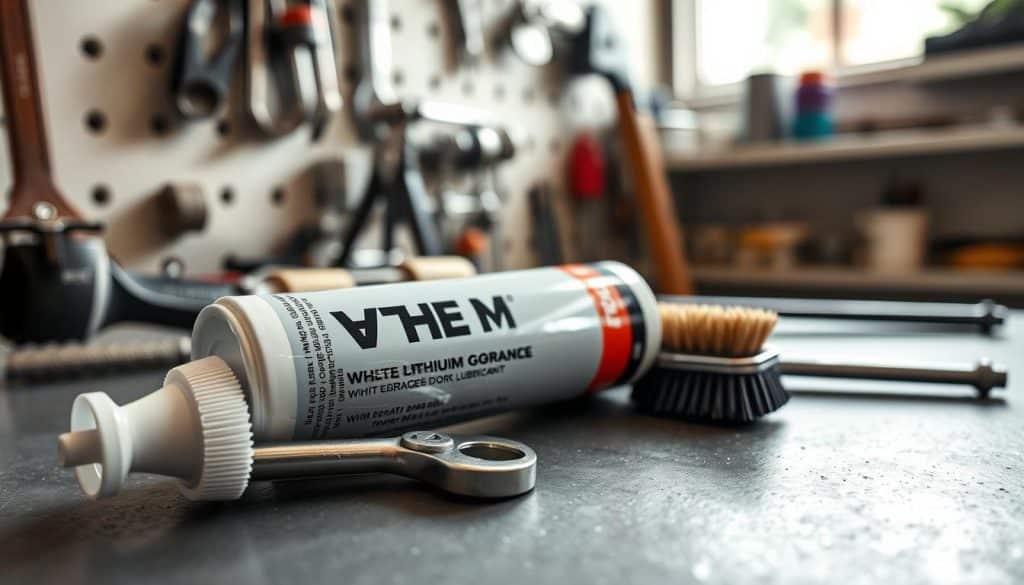
- What not to use: regular WD-40 cleans and displaces moisture but is not a long-term lubricant.
- Trusted picks: WD-40 Specialist White Lithium, DuPont Teflon dry film, and Blaster silicone cover most needs.
- All-weather performance: choose formulas rated for heat, humidity, and dust to protect the opener and tracks.
- Use sparingly: a small amount goes far—wipe excess to avoid buildup on garage door tracks.
For quick product advice or to buy professional-grade materials during a service, call us at (407) 788-1229. We can recommend the right lubricant for your climate and components.
Garage door spring grease
Start every lubrication task with a quick safety check to protect people and parts. Inspect and tighten accessible hardware, check rollers and hinges for wear, and sweep away debris so lubricants bond to clean surfaces.
Prep checklist
Before you touch anything, tighten nuts and bolts without overtightening. Replace rollers with exposed bearings and cracked hinges. If springs look stretched or corroded, do not force the system; call us at (407) 788-1229.
How to lubricate torsion and extension springs safely
Apply a controlled film across coils. Spread evenly to reduce friction and corrosion. Avoid overapplication that can fling onto flooring or panels.
Rollers and hinges
Aim lubricant at the bearing inside the roller and at hinge knuckles. Cycle the opener to help distribute product through moving parts.
Locks, bearings, and opener
Use a light coat on lock cylinders and end bearings to quiet operation. For the opener chain or belt, apply white lithium to the drive and run the unit. Wipe away excess to prevent drips and dust buildup.
Tracks
Clean tracks with a damp cloth to remove grit. Only apply a very light film inside the track if needed—too much will attract dust and impede roller travel.
- Quick reminder: wipe excess after lubrication to protect vehicles and floors.
- Need help? If you suspect damaged springs, stop and call. We dispatch licensed, insured, background-checked technicians 24/7 with a full guarantee on parts and labor.
Step-by-step DIY guide to lubricate your garage door
This step-by-step guide shows how to keep parts moving smoothly with minimal tools. Follow each task in order and work steadily. If anything feels unsafe, stop and call us for help.
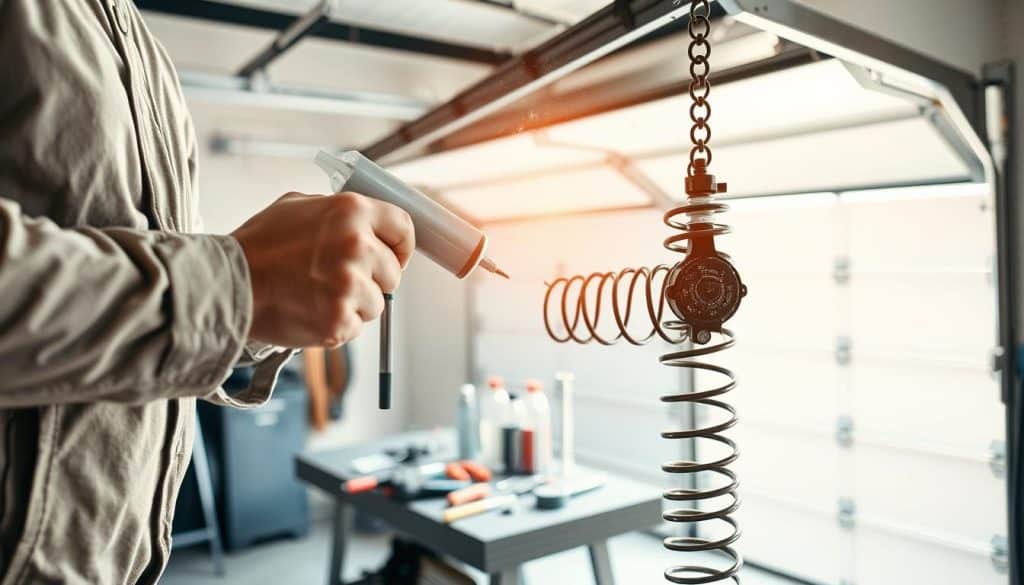
Gather supplies
What to have: a can of white lithium grease or a quality silicone spray, clean rags, a putty knife, and a step stool for reach.
Clean first
Remove old residue, dirt, dust, and debris so new lubricant bonds to metal and plastic. Wipe hinges, rollers, tracks, and visible coils until surfaces look clean.
Apply, then cycle
Use a thin, targeted coat on bearings, pivot points, and coils. Apply sparingly in tracks using a putty knife if needed.
Run the unit several times so the lubricant spreads across moving parts and quiets the system.
Wipe excess
After cycling, wipe away extra product to prevent drips, dust attraction, and debris buildup. Excess can gum up parts and slow rollers over time.
- Order of steps we recommend: hinges and rollers first, then springs, then the opener drive.
- Label your can and note the date to plan the next maintenance window.
- Need supplies or advice? We can supply professional-grade lubricant during a service visit. Call (407) 788-1229 or email EmeraldGarageDoorServices@gmail.com.
Troubleshooting noises and knowing when to call Emerald Garage Door Services
When lubrication fails to stop squeaks, the problem often lies in worn or misaligned components. We show common signs to watch for and explain next steps.
After lubrication: signs of worn parts, misalignment, or loose chains
Red flags include squeals that return quickly, rattling over joints, or jerking motion during travel. A door opener that strains or reverses mid-cycle needs attention.
- Loose opener chain or belt can slap the rail; we set correct tension and check travel limits.
- Flat-spotted rollers, cracked hinges, or worn garage door parts must be replaced, not relubricated.
- Track dents or misalignment that pinch rollers require professional straightening.
- Persistent noise after care can signal alignment problems or damaged parts; call for a full inspection.
24/7 help in Central Florida
We provide 24/7/365 emergency service across Orlando and nearby communities. Our licensed, insured, bonded technicians are background-checked and guarantee parts and labor.
If the door remains noisy or struggles after DIY care, call (407) 788-1229. We test balance, safety sensors, and all moving parts. We then give clear repair or replacement options with transparent pricing.
Why choose Emerald Garage Door Services for garage door lubrication and care
Founded by James Balfe, we are a family-owned team that makes maintenance predictable and stress-free. We combine decades of field experience with modern tools to protect your investment.
We offer repair, installation, and regular maintenance for garage systems and openers. Every technician is licensed, insured, bonded, and background-checked. We guarantee parts and labor on every job.
Regular lubrication extends life and improves safety. We use all-weather lubricants like white lithium and silicone. We clean tracks and wipe excess during each tune-up to reduce wear on parts and the opener.
- Decades of expertise: reliable maintenance and fewer surprises between visits.
- Local care: schedules and products tailored to Central Florida heat and humidity.
- Professional-grade lubricants: reduced friction and longer life for critical parts.
- Comprehensive service: multi-point inspections, opener upgrades, and same-day emergency repairs.
Call (407) 788-1229 or email EmeraldGarageDoorServices@gmail.com for 24/7, family-owned service that keeps your doors running smooth and safe.
Conclusion
A clear maintenance rhythm protects hardware and reduces surprise repairs.
Regular lubrication and cleaning extend the life of your garage door and its components. Start by removing dirt, dust, and debris before you apply any lubricant.
Use all-weather white lithium or quality silicone on springs, hinges, rollers, tracks, and bearings. Apply sparingly, cycle the unit to spread product, then wipe excess away.
Often lubricate every three to six months or sooner if you hear new noise or rough travel. Document each service date so the next step is never missed.
If noise or binding continues, call us. We are available 24/7/365 in Orlando with licensed, insured, bonded, background-checked techs. Call (407) 788-1229 or email EmeraldGarageDoorServices@gmail.com for fast, guaranteed service.
FAQ
What is white lithium grease and why do we recommend it for parts maintenance?
White lithium grease is a thick, long-lasting lubricant that adheres to metal components. We recommend it for hinges, bearings, and opener chains because it reduces friction, resists fling-off, and handles heat better than light oil. For nylon rollers and sealed bearings, a silicone-based spray can be a better choice to avoid attracting dust.
How often should we lubricate moving parts in Central Florida?
We advise lubricating every three to six months. In hot, humid climates like Orlando, increase frequency toward three months. Regular checks keep moving components quieter and extend service life.
Can we use WD-40 for long-term lubrication?
No. Regular WD-40 is a solvent that cleans and displaces moisture but does not provide lasting lubrication. Use WD-40 Specialist White Lithium or a silicone spray for durable results instead of standard WD-40.
What steps should we take before applying any lubricant?
Safety first. Inspect for worn or loose components, tighten hardware, and clear debris from tracks and parts. Clean old residue with a rag and putty knife so new lubricant adheres properly and doesn’t trap grit.
How do we safely lubricate torsion and extension springs?
Apply lubricant sparingly along the length of the spring while the door is closed to keep it controlled. Use a spray or brush and avoid using hands near the spring without proper tools. If springs are rusty, noisy, or look damaged, contact Emerald Garage Door Services for a professional inspection and repair.
Which parts should we focus on when lubricating to reduce noise and wear?
Target bearings, hinges, rollers (especially metal bearings), and the opener chain or belt. For tracks, clean thoroughly first; only apply a light film inside the track if manufacturer guidance allows. Avoid over-application to prevent attracting dust and buildup.
What supplies should we gather for a DIY lubrication job?
Gather white lithium grease or a silicone lubricant, clean rags, a putty knife, and safety glasses. A small brush or spray straw helps apply product precisely to bearings and pivots.
What is the correct procedure to apply lubricant and ensure even coverage?
Clean first, apply lubricant to pivots and bearings, then cycle the door several times to distribute the product. Wipe away excess to prevent dripping and dust attraction. Repeat limited applications rather than heavy coats.
When does noise persist after lubrication and indicate a bigger problem?
Persistent grinding, clanking, or uneven movement after proper lubrication can signal worn rollers, misaligned tracks, or failing springs. At that point, we recommend calling Emerald Garage Door Services for a diagnostic and repair.
Do we lubricate opener chains and belts differently?
Yes. Apply white lithium grease to metal chains sparingly. For belt drives, use a lubricant the manufacturer approves—typically a light spray silicone—to avoid gum buildup and preserve belt material.
How do we choose lubricants that handle heat, humidity, and dust common to this region?
Choose all-weather products labeled for high-heat and humidity resistance. White lithium and quality silicone sprays perform well in Central Florida. Look for brands like WD-40 Specialist White Lithium, DuPont Teflon dry film, or Blaster silicone for dependable results.
Can lubricating components hide safety issues?
Lubrication can mask symptoms temporarily. That’s why we inspect hardware, springs, and seals before lubrication. If you notice loose cables, visible wear, or sagging sections, stop and call a professional immediately.
What maintenance services does Emerald Garage Door Services provide in Orlando?
We offer inspections, lubrication, repairs, spring replacement, track alignment, and opener service. Our family-owned team is background-checked, licensed, insured, and bonded. Contact us at (407) 788-1229 or EmeraldGarageDoorServices@gmail.com for 24/7 support.