Have you wondered why a stuck or noisy entry can signal a much bigger hazard at your home?
We are Emerald Garage Door Services, a family-owned team serving Orlando and Central Florida. We respond 24/7/365 with licensed, insured, and bonded technicians. Every tech is background-checked, and we stand behind all parts and labor. We are experts in Garage Door Torsion Spring Replacement Services.
Replacing a high-tension counterbalance is dangerous. Operating a broken spring can bend sections or harm an opener. We explain how torsion helps counterbalance weight so the unit works smoothly and safely.
Call us at (407) 788-1229 or email EmeraldGarageDoorServices@gmail.com for prompt, honest service. We inspect cones, bars, cables, and parts to restore reliability and protect your investment.
Key Takeaways
- We offer 24/7 emergency response across Orlando with guaranteed parts and workmanship.
- High-tension systems are risky; trained pros should handle winding and major adjustments.
- Ignoring a broken spring can cause bent sections and opener damage.
- We inspect cones, bars, cables, and related parts to ensure full system safety.
- Clear pricing and honest recommendations help you choose the best option for your time and use.
- Contact (407) 788-1229 or EmeraldGarageDoorServices@gmail.com for immediate help.
Why Torsion Springs Matter on Your Garage Door
The counterbalance mechanism is the hidden workhorse that makes an otherwise heavy entry easy to lift. We want you to understand how the system protects your investment and why trained techs should handle high-tension tasks.
How torsion springs counterbalance door weight
Torsion springs store rotational energy on a shaft above the opening. That stored force turns drums which wind the cables that lift the door. The result is a smooth, consistent lift with minimal strain on the opener and tracks.
We inspect coils, check size, and test balance to ensure safe operation. A properly matched torsion spring and shaft alignment keeps hinges, rollers, and openers working longer.
Torsion vs. extension springs at a glance
Torsion systems sit above the panel and use a shaft and drums. Extension systems mount along the track and operate differently. Each design has pros and cons for space, control, and exposed parts.
- Rotational force offsets the door’s weight for easy manual operation.
- Shaft, drums, and cables must work in sync for consistent travel.
- We choose the correct size and sizes to match the panel weight and hardware.
Recognizing a Spring Broken versus an Opener Problem
A sudden loud bang and a heavy moving panel usually mean the balance system failed. We respond fast 24/7 when your entry feels too heavy or won’t stay open.
Common signs to check right away
Listen and feel: A sharp pop followed by a much heavier lift is a classic indicator of a spring broken. The fully closed position takes the most stress and often fails first.
- If you heard a loud pop from the garage and the garage door now feels very heavy, the balance assembly likely failed.
- A panel that won’t stay open or drops quickly usually points to a coil issue rather than the opener motor.
- An opener that stalls or strains with a heavy entry suggests the spring system failed, not a motor defect.
We secure the opening and check cables, drums, and hardware before any repair. Do not force the unit or keep cycling the opener. When uncertain, call Emerald Garage Door Services and we’ll diagnose on-site and advise the right repair at the right time.
Safety First: High Tension, High Risk
High-tension systems demand respect — one wrong move can cause serious harm. We approach every job with caution. Our team is licensed, insured, bonded, and background-checked. All services and labor are guaranteed.
Never touch a set screw unless a properly fitting winding bar is fully seated in the cone. Do not use screwdrivers or a box/socket wrench to wind coils. Keep a winding bar in the winding cone at all times while you adjust tension.
Wear eye protection and stand on a steady ladder. Unplug and disengage the opener before any work. Clear the area so no one walks under the panel while hardware is under load.
- High tension can cause severe injury; we follow strict control steps.
- We inspect the cone, set screws, and bars and only use properly sized winding bars.
- If any cone or set hardware slips or looks damaged, we stop and call a licensed pro.
DIY attempts with the wrong tool or wrench increase risk. If any step feels unsafe, stop and call Emerald Garage Door Services — we’re available 24/7 in Orlando.
Essential Tools and Parts for the Job
A well-stocked truck and the right tools cut repair time and risk on every service call. We stock commercial-grade parts and the tools our techs need to work safely and efficiently.
Minimum tools we carry:
- Two 1/2″ x 18″ winding bars cut from 36″ rods and extra bars for backup.
- One or two 10″ vise grips, an adjustable wrench, and a full socket wrench set.
- A firm ladder, quality lighting, and measuring tools to verify sizes and cone alignment.
Parts on our trucks:
- Commercial-grade springs, cables, drums, fasteners, and bearings to suit most homes.
- Spare fasteners and hardware so we can finish work in one visit.
- We test the opener and balance after installation to make sure all parts work together.
We verify size and sizes on site and secure the shaft and panel before any work. Our goal is safe, durable results with guaranteed parts and labor.
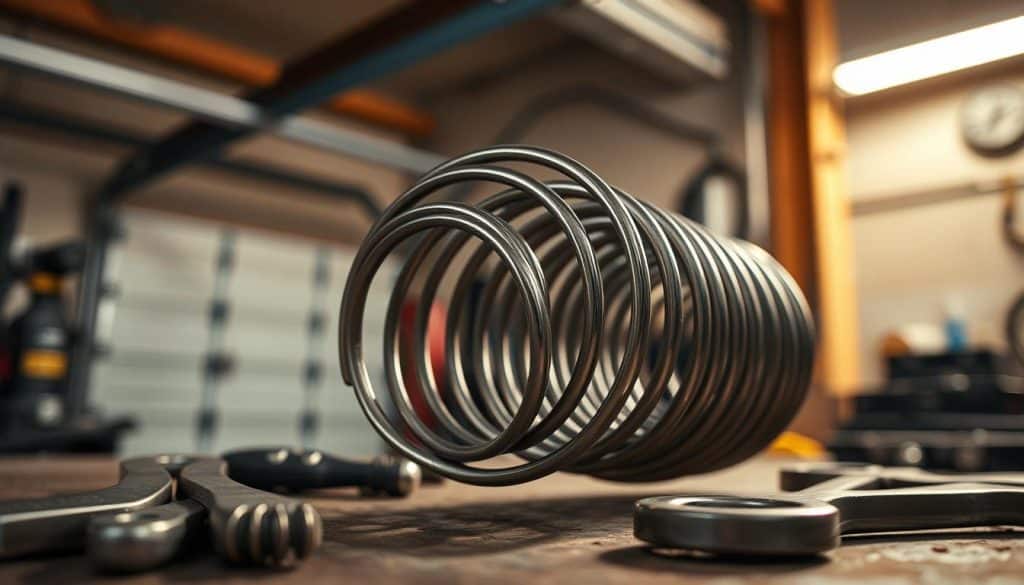
How to Identify and Measure the Right Torsion Spring Sizes
Getting the correct measurements is the first step toward a safe, balanced system. We confirm specs to choose the correct parts so your entry operates reliably.
Wire size, inside diameter, relaxed length, wind direction
Measure wire by counting 20 coils. That gives a repeatable value you can convert to wire thickness. Record the inside diameter and the relaxed length — not a wound length.
Right-wind springs sit left of center and left-wind install on the right. Cone colors vary, so we verify the cone and the winding cone markings directly.
Avoiding common measuring mistakes
Do not measure a wound spring. Tension shortens the length and makes the size wrong.
- We measure 20 coils for accurate wire size calculations.
- We record inside diameter and relaxed length for correct sizes.
- We confirm wind direction and end placement so drums and cables track correctly.
We make sure sizes match the actual door weight. Correct sizing prevents wear on the opener and related hardware and reduces rework.
Pre-Work Steps: Secure the Door and Disconnect the Opener
We always isolate electrical power and stabilize the panel before touching any high-tension parts. First, we unplug the opener or flip the breaker. Then we disengage the trolley so the door opener cannot move the panel while we work.
Our Orlando techs follow a strict checklist on every service call. We never start with the door open. That rule prevents sudden movement and reduces risk to people and property.
- We disconnect power to the opener and separate the panel from the trolley before work.
- We secure the garage door with clamps and verify the cables stay seated at each drum.
- We stabilize the torsion shaft and double-check fasteners before loosening any hardware.
- We stage tools and parts so the job finishes quickly and the entry is out of service for minimal time.
Communication is part of safety. We protect the work area, keep you informed about time and steps, and confirm clamps and cable seating before any coil or cone is touched.
Unwinding Old Springs Safely
Before any bar turns, we set visual guides and secure our stance to manage tension. Our team uses proven techniques to control winding and protect your home and family. Safety and steady control guide every step.
Correct bar insertion and maintaining control
Insert the winding bar fully into the cone before loosening set screws. We keep at least one bar in place while we unwind in controlled quarter turns. Maintain a firm grip and stance so the bar never slips or unseats.
Marking the shaft and drums for accurate reassembly
We mark the torsion shaft and drums before disassembly. Those marks help the door return level during reassembly and reduce extra adjustments to cables and hardware.
- We mark shaft and drums so the panel returns level.
- We seat a bar, loosen screws carefully, and unwind in quarter turns.
- If the cone binds, we tap the bar gently to clear swollen shaft areas.
- We document any abnormal wear on cones, screws, or shaft that may need replacement.
- Safety remains the priority until all tension is released from the old spring.
Throughout the process we make sure cables stay on drums and that set screws are handled with correct tools. Our methods reduce risk and make reassembly predictable.
Removing Old Hardware and Inspecting Components
We start by removing old hardware to reveal any hidden wear that could cause future failures. First, we loosen and remove bolts at the center stationary cones. We do this with the shaft secured and all tension controlled.
We inspect the center bearing plate and anchor bracket next. Only one bushing belongs between cones to prevent bracket wear. If bearings show play, we replace them.
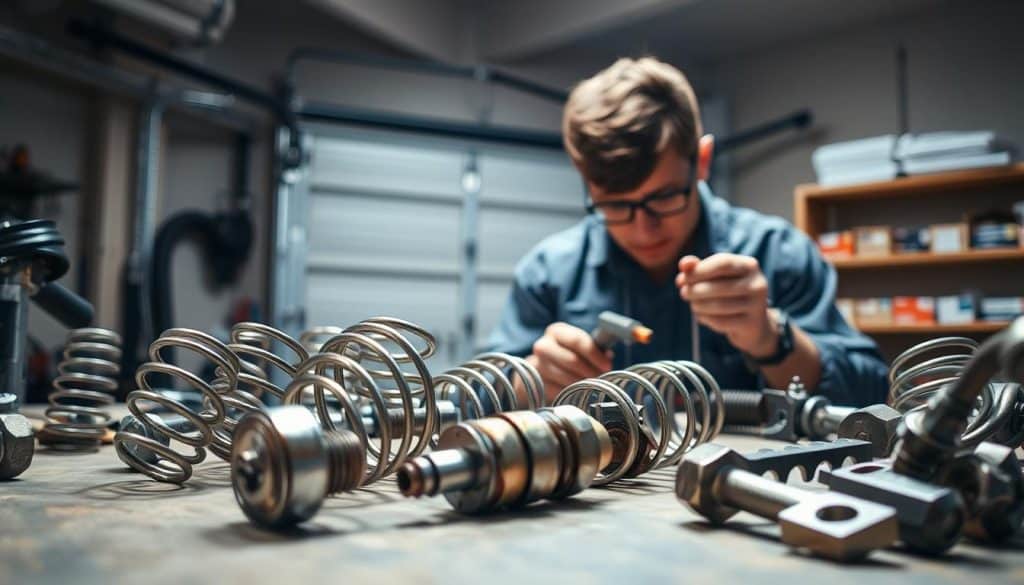
- We check anchor bracket lag screws and tighten or reinforce for long-term stability.
- We inspect end bearing plates and cable drums for cracks, wear, or misalignment.
- We slide coils toward the drums and file any set-screw burs on the shaft so new parts fit freely.
- We measure the shaft and related hardware to confirm proper size and fit for new parts.
We replace only what’s needed and stand behind every repair with our guarantee. Our techs document findings and propose preventive fixes that save time and money. Work proceeds only after you approve the plan.
garage door torsion spring replacement
Placement and alignment determine whether your panels lift smoothly or bind under load.
Positioning right-hand and left-hand springs correctly
We place matched coils on the proper side so torque balances across the shaft. Right-wind coils typically sit left of the center bracket. Left-wind coils go on the right.
Do not rely only on paint marks. We verify wind direction at the end before mounting to avoid misplacement.
Setting set screws and aligning cones
We align the stationary cone at center and position the winding cone at each end for accurate torque transfer. Then we snug set screws so they hold without damaging the shaft.
- We confirm bar clearance and cone seating before any tension is applied.
- We set drums to their reference marks so the panel lifts level.
- We make sure the assembly is straight, true, and matched to your panel weight for quiet, even operation.
Winding New Springs, Setting Tension, and Balancing
Precise winding and step-by-step testing are how we guarantee a smooth, safe operation before we leave. We wind in small increments and keep control at every turn.
Quarter-turn control, set screws, and cable seating
We wind each new spring in controlled quarter turns with a winding bar fully seated in the cone. One bar stays engaged while the other advances so we never lose control.
Next, we torque set screws to manufacturer specs. This secures cones without deforming the shaft or harming hardware.
We watch cable seating on the drums. Proper cable tracking keeps the panels level and reduces wear on tracks and rollers.
Halfway balance test and fine-tuning
We perform a halfway balance test by lifting the panel to mid travel. The panel should hover without drifting.
If it tilts or drifts, we add or remove measured turns until lift is even and smooth. We make sure both sides lift level and that cables track cleanly through full travel.
- Controlled quarter turns: maintain safety and predictability.
- Secure set screws: lock cones without damage.
- Cable verification: ensure clean tracking on drums.
- Final check: confirm consistent force across the full motion.
We balance your system precisely and guarantee smooth, safe operation before we leave. If anything looks off, we stop and adjust until it meets our standard.
Final Checks: Reconnect Opener, Lube, and Test Cycles
A proper finish includes lubrication, alignment checks, and multiple test cycles to confirm reliability.
We reconnect the opener after manual balance tests. Then we run several powered cycles to watch travel and listen for noise.
Next, we apply the right lubricant to hinges, rollers, and bearings. We leave a light film on coils and springs for quiet operation.
- Reconnect the opener, test manual travel, then run multiple powered cycles.
- Lubricate hinges, rollers, bearings, and lightly coat coils and springs.
- Verify cable alignment on drums and adjust after test cycles.
- Confirm safety reversal and force settings on the opener for safe use.
- Check fasteners, plates, and parts are tight and correctly positioned.
We provide care tips and a recommended service schedule for your Orlando home. Our team documents what we did and how much time until the next inspection.
We stand behind our work and make sure the system leaves clean, quiet, and tested.
Special Cases: Low-Headroom, EZ-Set, and Unique Systems
Certain low-clearance and proprietary systems behave differently during winding and require extra checks. We tailor our methods so each installation stays safe and reliable.

When standard instructions don’t apply
We identify the system first. Low-headroom setups sometimes have drums outside the end plate and may wind down instead of up. EZ-Set and other proprietary assemblies need specific tools and steps.
- We confirm cone design, shaft layout, and cable routing before any winding begins.
- We adjust winding direction and drum placement based on the unit’s geometry.
- We match sizes and hardware to the manufacturer’s specs so components work together.
- Our techs carry the tools and training to service non-standard garage doors safely.
- We document the configuration and give clear maintenance guidance for future visits.
Lifecycle, Costs, and When It’s Time to Replace
Regular use shortens component life, so planning matters more than most homeowners expect. Standard systems often average about 10,000 cycles, but daily trips and heavy use can cut that time dramatically.
We recommend options that fit your use. For high-traffic properties, high-cycle upgrades extend service length and reduce unexpected repair visits.
We assess panel weight, size, and related parts to make sure coils match the load. Incorrect size choices shorten life and raise costs over time.
- Most standard units average ~10,000 cycles, which equals several years for typical homes.
- Heavy use may require high-cycle components to increase expected length between service.
- We review costs, parts options, and timelines so you can plan the best path forward.
- If balance problems recur, it’s often time to replace before failure to avoid extra repair expense.
We make sure you understand trade-offs and timelines. Our team provides transparent pricing and clear recommendations so you can decide with confidence.
Pro Help in Orlando: 24/7/365 Emergency Service You Can Trust
We respond any time, day or night, so you’re never left waiting. We are family-owned, founded by James Balfe, and we back every job with a written guarantee on parts and labor.
Licensed, insured, bonded, and background-checked technicians
Our team is vetted and certified. Every technician is licensed, insured, bonded, and background-checked for your safety. We arrive with stocked trucks to finish most repairs in one visit.
Call Emerald Garage Door Services at (407) 788-1229
Call us at (407) 788-1229 or email EmeraldGarageDoorServices@gmail.com for immediate help. We provide fast triage, secure the opening, and perform full-system checks to prevent repeat problems.
- 24/7/365 emergency service across Orlando and Central Florida.
- Licensed, insured, bonded team with background checks for trust and safety.
- We stock quality parts to complete most repairs on the first visit.
- Family-owned values and a written guarantee back every repair we perform.
- We make sure your door is secure quickly with expert torsion work and full-system checks.
Beyond Springs: Openers, Installations, and Preventive Maintenance
We install and service modern openers and full systems to keep your entry reliable and safe. Upgrades add convenience and can reduce wear when matched to the panel weight and hardware.
Smart openers and latest technology upgrades
We install smart openers with battery backup, app control, and enhanced sensors. These features improve safety and let you monitor access from anywhere.
Regular maintenance keeps rollers, cables, and springs running quietly. We disconnect the opener for manual balance tests and perform lubrication and adjustments.
- We repair and install openers with modern safety standards and smart features.
- Preventive maintenance reduces wear on cables, rollers, and springs.
- We perform balance tests and adjustments to protect motors and extend life.
- Full installations include new panels, tracks, and matched torsion systems sized for your home.
- We make sure your setup fits usage, tech preferences, and budget.
- Ask about maintenance plans to catch wear early and avoid unexpected downtime.
Conclusion
Prompt attention keeps systems working safely and extends component life. Regular checks and timely service reduce costly failures and extend service length.
Your satisfaction is our top priority. We guarantee our work and stand ready whenever you need help in Orlando. If a spring fails, avoid cycling the panel and call us right away to prevent further damage.
We handle torsion systems with care and restore safe operation quickly. If the unit feels heavy, won’t stay open, or you heard a loud bang, contact us immediately.
We make sure your entry is balanced, quiet, and reliable before we finish. For fast, trusted repair or questions, call (407) 788-1229 or email EmeraldGarageDoorServices@gmail.com.
FAQ
What signs indicate a broken torsion spring versus a problem with the opener?
A loud pop, a visibly snapped coil, or a door that feels extremely heavy when lifting are classic signs the spring failed. If the opener runs but the door barely moves or won’t stay open, the spring likely needs attention. If the opener won’t run at all, check power and the unit first. When in doubt, we recommend a professional inspection.
How dangerous is working on torsion springs and when should we call a pro?
Torsion springs store high tension and can cause severe injury if they slip or break during winding. Stop and call a licensed technician if you lack proper winding bars, a steady ladder, or experience. We prioritize safety and advise homeowners not to attempt high-tension work without training.
What basic tools and parts are required for a safe service visit?
Essential tools include two certified winding bars, a sturdy ladder, vice grips, an adjustable wrench, and a socket set. Common replacement parts are matched springs, cables, drums, center bearing plates, anchor brackets, and fasteners. We bring all parts and tools for a complete job.
How do we identify the correct spring size and wind direction?
Measure wire diameter, inside diameter, and relaxed length. Count coils or calculate turns needed for your door height. Right-hand winds and left-hand winds must match original positions. Incorrect sizing or wind direction causes poor balance and premature wear. We handle measurements precisely to avoid mistakes.
What are the key pre-work safety steps before touching the spring?
Disconnect the opener power and secure the door in the closed position. Use a steady ladder and clear the area. Clamp the track if needed and mark the torsion shaft and drums for reassembly. These steps reduce risk and make reinstallation predictable.
How should old springs be unwound safely?
Insert winding bars fully into the winding cone and maintain firm control. Back off the set screws a turn at a time and relieve tension in small, controlled steps. Never use improvised tools. If bars slip or you feel unsure, stop and call our technicians.
What components should be inspected when removing old hardware?
Inspect the center bearing plate, anchor bracket, end bearing plates, drums, cables, and fasteners for wear or damage. Replace worn bearings, frayed cables, or corroded hardware to prevent future failures. We replace compromised parts as needed during service.
How do we ensure springs are positioned and set correctly during installation?
Position right-hand and left-hand springs on their respective sides and align cones with the torsion shaft. Tighten set screws to specified torque and seat cables in drums evenly. Proper alignment prevents binding and ensures smooth operation.
What’s the correct method for winding new springs and setting tension?
Wind in quarter-turn increments using proper bars, then set the main set screws to torque spec. Perform a halfway balance test by lifting the door manually to check counterbalance. Fine-tune tension so the door remains stable and opens smoothly without excess force.
What final checks should be done before finishing the service?
Reconnect the opener, run multiple test cycles, lubricate bearings and bearings’ contact points, and confirm cables are seated and set screws remain tight. Verify safety reverse and photo-eye operation. We leave systems tested and reliable.
How long do properly installed torsion springs typically last?
Standard springs are rated around 10,000 cycles. Life varies with usage, environment, and maintenance. Heavy daily use can shorten life. We review usage patterns and recommend higher-cycle springs when appropriate.
Are there special cases where standard procedures don’t apply?
Yes. Low-headroom systems, EZ-Set setups, and unique manufacturers’ designs require modified techniques and sometimes special parts. We assess these cases and apply correct methods or order specific components to ensure safe work.
What should we expect if we call Emerald Garage Door Services in Orlando for emergency service?
Expect licensed, insured, bonded, and background-checked technicians available 24/7/365. We respond quickly, diagnose the issue, and provide transparent pricing and reliable repairs. Call (407) 788-1229 for immediate assistance.
Can we upgrade the opener or add smart features during a spring service?
Yes. We can install compatible smart openers, upgrade wiring, and recommend technology that improves safety and convenience. We discuss options and perform installations alongside spring work to minimize repeat visits.