Have you ever wondered what keeps a heavy panel moving smoothly and safely every day?
We help homeowners in Central Florida with reliable repair, installation, and maintenance. Emerald Garage Door Services is family-owned and available 24/7/365 for emergency support. We explain how a standard Garage Door Torsion Spring system mounts on a shaft above the center and transfers torque to cable drums to lift the panel. A properly balanced unit stays down, stays up, and holds mid-travel. That balance matters for long-term performance and the life of related parts.
We handle the high-tension work so you can stay safe. Our technicians check balance, match a pair of springs when needed, and verify smooth, quiet operation. We are licensed, insured, and bonded. Every team member is background-checked before their first call.
Call (407) 788-1229 or email EmeraldGarageDoorServices@gmail.com for fast, satisfaction-first service.
Key Takeaways
- Proper balance prevents strain and extends component life.
- We recommend replacing both springs in multi-spring setups for even wear.
- Our team sizes springs to match door weight and cable drum specs.
- Licensed, insured, and background-checked technicians ensure safe service.
- We offer 24/7/365 emergency support across Central Florida.
Understanding Garage Door Torsion Springs Today
A clear view of the shaft, cones, and drums demystifies how the panel rises and stops.
How energy becomes lifting force: A winding cone stores torque by adding turns. That torque moves through the shaft into cable drums. The cables wrap on the drums and lift the bottom of the panel smoothly to the top of travel.
As the coils unwind, track geometry and drum design keep the system balanced. The number of drums and correct track radius matter for consistent operation.
Comparing common systems
Torsion setups sit overhead on a tube and are self-contained. They use cones, a shaft, and drums to lift safely. Extension setups run along the sides with loops and pulleys. Those need safety cables and more frequent checks.
- Safety: Self-contained overhead systems reduce flying-part risk.
- Longevity: Properly sized parts last longer and cut surprise downtime.
- Service: Winding bars are the correct tool for adjustments; never substitute household items.
Identify Your Garage Door Spring Type Before You Act
Before you touch any hardware, learn how to spot the system type from a safe distance. We help homeowners and business owners identify systems without handling components. Then call us for licensed, insured service with guaranteed results.
Spotting an overhead torsion setup:
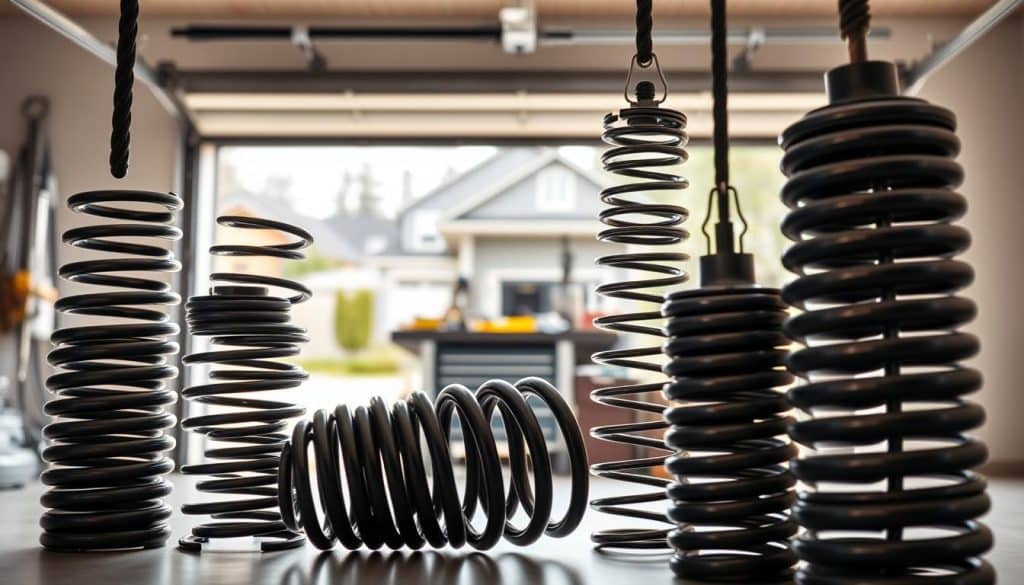
Look above the opening for a tube with coils and cones at each end. Drums connect to cables at the corners and a shaft runs through the center. Color marks often show left and right wind so a matched pair lifts straight.
Side-mounted extension cues
Side systems have coils along the rails. They end in loops and use pulleys near the top corners. You can see the loops and cable routing from the floor without touching anything.
- Observe whether the panel holds at top, mid, and bottom — poor balance suggests failed parts.
- Stop using the unit if cables fray, loops elongate, or coils show gaps.
- Photograph the shaft, cones, serial plates, and any visible misalignment before you call.
These quick checks let us pre-stage the correct parts and restore safe operation faster. Call Emerald Garage Door Services for expert, same-day evaluation.
Safety First: Why Torsion Spring Work Is Not a DIY Task
High-energy coils store enough force to cause serious harm if handled incorrectly. We urge homeowners to avoid attempts at adjustment or repair.
Only use proper winding bars and procedures. These systems hold torque that can release suddenly. Improvised tools slip. Set screws can back off. Cones may spin under load.
High tension hazards, winding bars, and injury risks
Improvised tools often fail. That failure can cause lacerations, broken bones, or worse. Even a small mistake can send parts flying.
When to stop using the door and call a professional
- Hearing a loud bang or seeing a visible gap in a coil — stop immediately.
- If the unit suddenly feels much heavier to lift — do not operate it.
- Frayed cables, stripped gears, or bent top sections mean you need help now.
Keep children and pets clear until we secure the unit and relieve tension. We arrive with the correct tools, protective gear, and replacement parts to replace springs safely and restore balance.
Our promise: licensed, insured, and bonded technicians. We offer 24/7/365 emergency support and will guide you on basic safety steps until we arrive.
Essential Terms and Parts You’ll Hear From the Technician
A short glossary of common parts helps you follow the service walk-through confidently.

We use clear names so you know what we touched and why. We explain each part and our guarantee covers parts and labor.
- Stationary cone — anchors the spring to the bracket.
- Winding cone — accepts winding bars for controlled torque adjustments.
- Shaft — carries torque to the drums and sits in end bearing plates.
- End bearing plates — keep the shaft aligned and reduce noise.
- Cable drums — wrap the cable so both corners lift evenly and stay square.
We also point out set screws, winding bars, and safety cables. We check steel quality, diameter, and wire size when selecting parts. This helps match duty cycle and extend life.
When we arrive, we name each part during the walkthrough. That keeps decisions simple. Our team is background-checked and we work to leave every home safe and informed.
How to Measure for the Right Torsion Springs
A few careful checks let us bring the exact components your system needs. We gather simple, precise measurements so the correct parts arrive the first time and the unit performs like new.
Method A: Measure existing parts
We measure five characteristics: inside diameter, wire size, length, wind direction, and end type. These define the coil geometry and ensure matched replacements.
Method B: Weighing the panel
If the unit is off-balance or measurements are uncertain, we weigh the panel with an analog scale. Analog scales avoid digital freeze and give steady readings while we isolate the opener.
Method C: Use model, drum number, and track radius
We record the drum number (common 4″ drums marked “4” or “8”; larger drums may read 525 or 575), track radius, and door height. These factors determine required turns, lift curve, and correct shaft clearance.
- We verify shaft length and clearances so coils fit safely and operate without rubbing.
- We use the right tools to avoid damage to cones, bars, or threads while measuring.
- Accurate measurements save time, reduce callbacks, and ensure proper balance—stays down, stays up, and holds mid-travel.
If you’re unsure, we’ll perform measurements on-site and guarantee the fit. We bring the right parts, tools, and expertise so the job finishes correctly the first time.
Selecting the Correct Spring Specifications
Choosing the right specifications keeps your system balanced and extends service life.
Inside diameter, wire size, and length: balancing lift and cycle life
Inside diameter, wire size, and length work together to deliver lift without overstressing parts.
Thicker wire and proper length increase cycle life. A standard unit is about 10,000 cycles. Upgrades boost life but may change length or diameter to preserve lift.
Door height, door weight, drum size, and track radius considerations
We factor height, door weight, drum number, and track radius to fine-tune turns and the lift curve.
This prevents imbalance and keeps the opener from overworking.
Standard vs. longer-life and coated steel options
Standard specs balance cost and performance. Longer-life options use heavier wire and sometimes larger diameter for busy sites.
Coated steel offers corrosion resistance for coastal or humid areas and keeps operation cleaner over time.
- We recommend matched pairs after years of wear for smoother travel.
- We check overhead clearance so the set fits the shaft safely.
- We provide clear options, pricing, and a guarantee for Central Florida customers.
garage door torsion spring Replacement Decisions Homeowners Face
Deciding whether to replace one coil or both affects balance, safety, and long-term cost. We help homeowners weigh options clearly and confidently.
Replace both springs? Why matched pairs prevent imbalance.
When one spring in a two-spring system breaks, the mate is usually near end-of-life. Pairing a new spring with an old one creates uneven lift. That shortens the new part’s life and stresses cables and the shaft.
Converting from one spring to two: benefits and when it’s smart
Switching from a single heavy spring to two reduces shaft loads and lowers the chance of cables peeling off drums. We recommend conversion for heavier panels or when the existing size shows signs of overstress.
Unmatched springs vs. matched dimensions for maximum life
- Matched dimensions—same length, inside diameter, and wire size—deliver smoother lifting and more predictable service intervals.
- We size a new set so each spring carries half the weight, keeping center bearings and hardware healthier.
- Choosing the right pair now often saves money and downtime later. We provide clear options and a parts-and-labor guarantee so you can decide with confidence.
High-Level Overview: What a Professional Replacement Involves
A professional replacement follows a clear, safety-first sequence from start to finish. We explain each step so you know what we’ll do and why. Our process is transparent and backed by our guarantee.
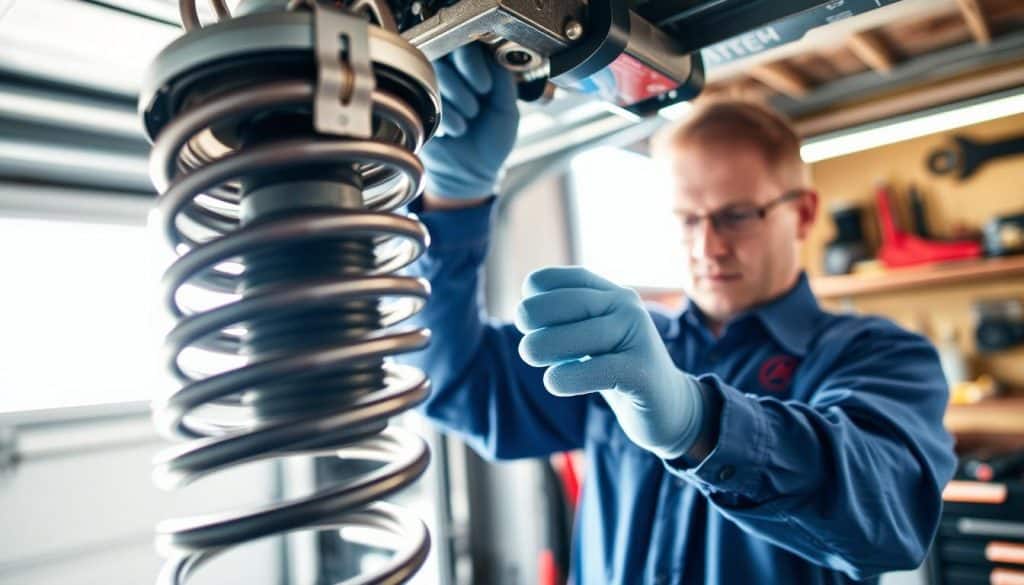
Secure and relieve tension. We secure the door in the down position and disconnect the opener. Technicians insert winding bars to relieve stored torque, then loosen set screws and remove the old coils safely.
Swap cones and install new parts. New cones and a matched pair are placed on the shaft with correct spacing. Set screws are tightened to manufacturer specs.
- Set torque with precise winding based on drum number and track radius.
- Verify cable seating in each drum groove and proper cable tension across end bearings.
- Perform a three-point balance test—down, top, and mid-travel—until the unit holds position and feels even by hand.
We finish by checking safety sensors and the manual release, cleaning the area, and documenting the visit. You get a clear service summary and warranty info before we leave.
Opener and System Considerations After Spring Service
After spring service, we check the opener so it isn’t hiding a bigger problem. A properly balanced unit reduces strain on the motor and prevents unexpected wear. We confirm the system shares the load correctly before we reconnect powered operation.
Ensuring the opener isn’t compensating for poor balance
We test manual balance first. If the section is heavy or uneven, the motor may be lifting more than it should.
We reset travel and force limits only after balance is confirmed. This prevents gear damage and keeps safety sensors working within safe ranges.
Side-mount openers and system compatibility
Side-mount (jackshaft) units need correct shaft clearances and drum seating. We inspect alignment, number of turns, and cable seating so the side drive runs smoothly without pulsing or noise.
- Test manual balance before engaging the opener.
- Confirm rail or side-mount alignment and free travel across the opening.
- Reset travel and force settings only after the system holds evenly.
- Verify photo-eye alignment and auto-reverse sensitivity for safety.
- Recommend opener type or upgrades that match weight and usage to extend life.
We advise on maintenance intervals so the opener, springs, and cables share workload. A balanced system runs quieter, cooler, and lasts longer. We protect your investment and our guarantee by verifying compatibility before we leave.
Why Central Florida Chooses Emerald Garage Door Services
Central Florida trusts a local team that answers calls at any hour with fast, skilled service. We focus on safety, clear communication, and lasting results.
We are family-owned and led by James Balfe. Our company is licensed, insured, and bonded. Every technician completes a background check before their first call.
24/7/365 emergency response and vetted technicians
We respond any time with stocked trucks so most repairs finish on the first visit. Our team prioritizes safety and explains each step.
Family-owned excellence with guaranteed parts and labor
We guarantee parts and labor and follow up until you are satisfied. We size and match components to protect the opener, sections, and hardware for maximum life.
- Fast, friendly service that values your time and safety.
- Licensed, insured, bonded, and background-checked technicians.
- Options for longer-life configurations and clear cost comparisons.
- Service across Orlando with the same care we’d want for our family.
Call (407) 788-1229 or email EmeraldGarageDoorServices@gmail.com for immediate support and a guaranteed solution.
Conclusion
Clear measurements and professional winding protect your investment and your family.
We summarized how to identify systems, measure inside diameter, wire size, and length, or weigh the door and note drum number and track radius. Torsion setups use cones, a shaft, drums, and cables; all adjustments need proper bars and procedures.
Choose matched parts to balance weight and extend life. We replace components in pairs when needed and verify opener compatibility after service. Our team is family-owned, licensed, insured, and bonded.
For trusted, 24/7 help across Central Florida, call (407) 788-1229 or email EmeraldGarageDoorServices@gmail.com. We guarantee our work and stand behind every repair and part we install.
FAQ
What signs show a torsion spring needs replacement?
Listen for loud bangs when the door moves, notice uneven travel or the door sagging, or see visible gaps and stretched coils. Frayed cables, damaged cones, or a door that won’t stay open are also clear indicators. If you observe any of these, stop using the overhead system and call Emerald Garage Door Services in Orlando for a safe inspection.
Why shouldn’t I try to replace a spring myself?
These springs store high tension and can cause severe injury if mishandled. Proper tools like winding bars and set screws, plus knowledge of shaft and drum procedures, are required. Our licensed, insured technicians use the right gauges, torque settings, and safety cables to prevent accidents and protect your property.
How do technicians determine the correct spring specifications?
We measure inside diameter, wire size, and length, and check the wind direction and end types. We also weigh the door or use your door make/model, drum number, and track radius to calculate lift needs. That ensures balanced tension, correct torque, and longer cycle life for the springs and opener.
Should I replace both springs at once?
Yes. Replacing matched pairs prevents imbalance, reduces wear on cables and drums, and extends overall life. Two matched springs share load more evenly and protect the opener from compensating for a weak spring.
What’s the difference between torsion and extension systems?
Torsion systems mount above the opening on a torsion tube with cones and a shaft. Extension systems use side-mounted coils with pulleys. Torsion offers smoother operation, better balance, and often longer lifespan; extension systems are simpler but less stable under heavy use.
How long do springs typically last?
Life depends on wire diameter, cycle rating, and door weight. Standard springs often last 7–10 years under normal use. Higher-cycle or coated steel options deliver longer life. We’ll recommend the best type based on your door’s weight and usage patterns.
Can a misaligned or unbalanced door damage my opener?
Yes. If springs are weak or mismatched, the opener may overwork to lift the load, shortening motor life and causing failures. We check balance, drum alignment, and cable condition to ensure the opener operates within specs.
How do you measure spring wire size and winding direction safely?
We use calibrated calipers for wire size and inspect the cone marks for left or right wind. Measuring under tension is dangerous, so we relax and secure the shaft before taking measurements. This prevents errors and keeps technicians and homeowners safe.
What parts come with a typical replacement service?
A full replacement usually includes matched springs, winding cones, end bearing plates, steel set screws, cables, and safety cables when required. We also test drums, shafts, and the opener to confirm proper operation and balance.
How quickly can Emerald Garage Door Services respond in Central Florida?
We provide 24/7/365 emergency response across Orlando and surrounding areas. Our background-checked team aims to secure your property and restore safe operation promptly, with guaranteed parts and labor.
Are longer-life springs worth the extra cost?
For homes with frequent use or heavier panels, higher-cycle springs with thicker wire or coated steel deliver better value over time. They reduce downtime and lower the risk of premature failure. We’ll recommend the best balance of cost and durability for your situation.
What maintenance should homeowners perform between services?
Keep tracks clean and free of debris, lubricate bearings and pivot points per manufacturer guidance, and visually inspect cables and cones for wear. Never try to adjust spring tension yourself. When in doubt, call Emerald Garage Door Services for a professional check.
How do I schedule service or get a fast estimate?
Call us at (407) 788-1229 or email EmeraldGarageDoorServices@gmail.com. We provide transparent estimates, explain parts and labor, and prioritize safety-first repairs across Orlando and nearby communities.